A Frank Lloyd Wright Landmark Reopens After Years of Restoration in Florida
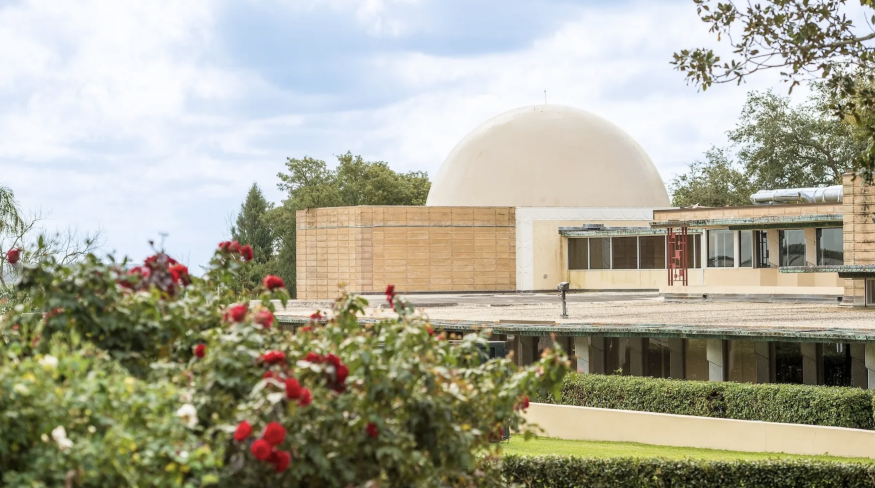
The stars have returned to one of Frank Lloyd Wright's most distinctive architectural creations. Florida Southern College in Lakeland, Florida, has reopened its historic planetarium following a six-year restoration that brought the landmark back to life with renewed architectural details and modern projection technology.
The planetarium, located within the college's Polk Science Building, is the only planetarium built from a design by Wright, one of the most influential American architects of the 20th century. After years of inactivity caused by a malfunctioning projection system, the restored space is once again welcoming students and members of the public.
The reopening marks an important milestone in the preservation of Florida Southern College's architectural heritage. The campus contains 13 Wright-designed structures, making it home to the largest collection of his buildings at a single site anywhere in the world.
According to Florida Southern College, public programming resumed in September 2026, allowing visitors to experience the historic space as both an architectural landmark and a functioning educational facility.
A Unique Piece of Frank Lloyd Wright's Architectural Legacy
Wright developed his vision for Florida Southern College as part of a broader campus master plan known as Child of the Sun. Conceived over several decades, the plan brought together academic buildings, religious spaces, walkways, and other structures in an architectural environment designed to connect education with nature.
The planetarium formed part of the Polk Science Building, which was constructed between 1954 and 1958. Its first show took place on April 7, 1960, establishing the facility as a resource for astronomy education.
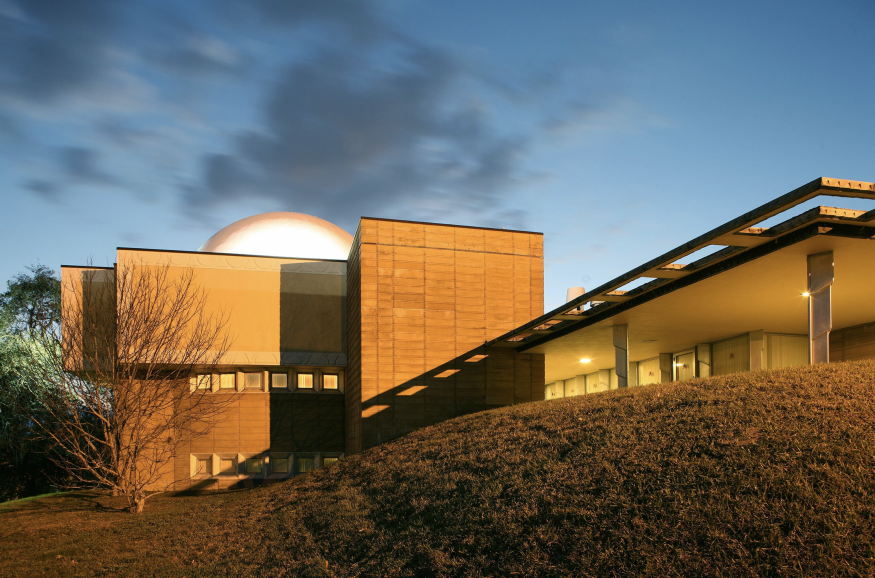
Unlike a conventional institutional building, the planetarium reflects Wright's interest in integrating functional requirements with a distinctive architectural identity. Its domed form, geometric concrete detailing, and compact theater create a space designed around the experience of looking upward and exploring the universe.
The structure also demonstrates Wright's interest in educational architecture that could serve a wider community. Although the planetarium supported college courses, it also welcomed school groups and public visitors, extending its educational purpose beyond the campus.
Its reopening therefore restores more than a historic room. It revives an architectural concept that connected scientific discovery, public learning, and the built environment.
What the Six-Year Restoration Involved
The restoration addressed deterioration to the building itself as well as the outdated technology that had prevented the planetarium from operating as intended.
Exterior work began in 2021, focusing on weather protection and the preservation of the building's distinctive facade. The team repaired the roof and flashing, addressed sections of the exterior cladding, and replaced approximately 280 custom textile-block tiles.
These concrete blocks are an important feature of Wright's architectural vocabulary. Their geometric patterns create a textured surface that adds depth and visual interest without relying on elaborate ornamentation.
The restoration team also worked to protect the building from water infiltration, a particularly important consideration in Florida's humid climate. Such repairs help preserve the historic fabric while reducing the risk of future deterioration.
Interior restoration followed in 2023. The project aimed to recover the original character of the theater after decades of alterations had changed its appearance and layout.
Among the changes was the removal of a computer closet added during the 1980s. Removing this later addition allowed the team to reinstate the theater's original circular seating arrangement.
The walls were repainted in a neutral color, replacing the deep-blue finish that had altered the interior's earlier appearance. The flooring was also restored to Cherokee Red, a color closely associated with Wright's work.
The theater's plywood seating, upholstered in red vinyl, was refurbished to bring back the intended circular configuration. Together, these details help reconnect the interior with Wright's original design.
Modern Technology Brings the Planetarium Back to Life
Preserving a historic planetarium presented a challenge beyond architectural restoration. The facility also needed equipment capable of delivering contemporary educational programming.
The original projection system stopped functioning in 2004, leaving the space without the technology needed for regular planetarium shows. Although the building remained an important part of the college's architectural heritage, its principal educational function was severely limited.
The latest restoration phase introduced a new COSM projection system and a Bowen sound system. These upgrades allow the historic theater to host immersive presentations while retaining its restored architectural features.
The combination of historic design and contemporary audiovisual equipment gives the facility a renewed purpose. Visitors can experience the original space while exploring astronomical subjects through modern presentation technology.
The project also demonstrates how historic buildings can accommodate updated functions without abandoning the architectural qualities that make them significant.
What Visitors Can Expect at the Restored Planetarium
Florida Southern College has reintroduced scheduled public programming alongside educational opportunities for its students and visiting school groups.
The rotating program includes presentations about the solar system, Mars exploration, the universe, and the search for planets beyond the Sun. Titles include Cosmic Adventure, Destination Mars: The New Frontier, From Earth to the Universe, Oasis in Space, and Undiscovered Worlds: The Search Beyond Our Sun.
According to the college's reopening announcement, public shows are scheduled on Tuesdays, Thursdays, Saturdays, and Sundays at 3:30 p.m. Individual programs run for approximately 20 to 32 minutes, while the complete visitor experience lasts around 60 to 90 minutes, including an introduction to the building's history.
The college has listed admission at $20 per person, with a reduced rate of $15 per person for families and groups of four or more. Visitors should check the official schedule before planning a trip because programming and ticket arrangements may change.
The restored planetarium also remains part of a broader campus experience. Visitors interested in Wright's architecture can explore other buildings associated with his Child of the Sun master plan.
Preserving Wright's Vision for Future Generations
The reopening of Frank Lloyd Wright's planetarium highlights the importance of maintaining historic architecture while adapting buildings to contemporary needs.
Its restoration required attention to structural repairs, original materials, interior arrangements, and modern technical requirements. Each element contributed to returning the building to active use rather than preserving it solely as a static architectural artifact.
The project also strengthens the cultural significance of Florida Southern College's campus, where Wright's designs demonstrate how architecture can shape the experience of education.
For architecture enthusiasts, the planetarium offers a particularly unusual example of his work. For students and public visitors, it provides a renewed opportunity to explore the universe inside a building that reflects the architect's distinctive vision.
With its original seating arrangement restored and new projection technology installed, Wright's only built planetarium has entered a new chapter, bringing together architectural preservation, science education, and public access.


Marilyn Monroe's Former Palm Springs Home Sells for $2.81 Million as New Owner Plans Restoration

Where to Buy a Christmas Tree in 2026, From Charlie Brown Chic to Ralph Lauren Classics

Lion Green Road Wins the Stirling Prize for Its Innovative Approach to Housing

A Frank Lloyd Wright Landmark Reopens After Years of Restoration in Florida

IKEA's New Art Collection Turns Everyday Home Decor Into Affordable Designer Art


