Marilyn Monroe’s Former Palm Springs Home Sells for $2.81 Million as New Owner Plans Restoration
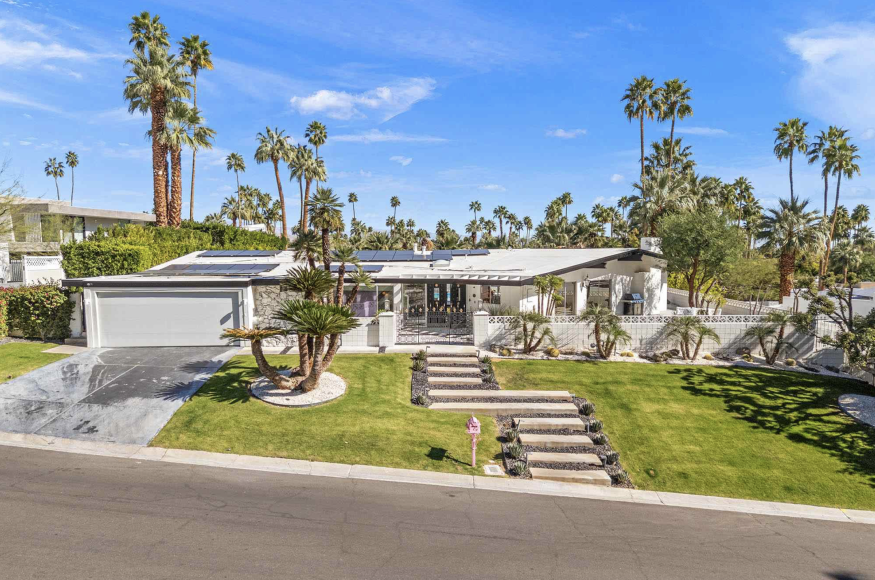
A Palm Springs home associated with Marilyn Monroe has entered a new chapter after selling for $2.81 million to local designer Violet Moran, known as the "Palm Springs Flipping Queen." The new owner plans to restore the property while preserving its distinctive midcentury modern architecture and connection to Hollywood history.
Located in the Vista Las Palmas neighborhood of Palm Springs, California, the residence has attracted attention for its architectural character, original interior features, and reported association with the legendary actress. The nearly 3,000-square-foot property was listed for $3.3 million earlier in 2026 before selling for less than its asking price.
The sale highlights the enduring appeal of midcentury modern homes in Palm Springs, where distinctive architecture and celebrity associations continue to attract buyers interested in historically significant properties.
However, the home's connection to Monroe requires some qualification. Although the property has been marketed as her former vacation retreat, questions have been raised about whether she actually owned it. That distinction adds an important layer to the story of a house whose reputation rests on both its architectural merits and its Hollywood associations.
Inside the Palm Springs Home Known as the Marilyn Monroe Doll House
Built in 1961 by the Alexander Construction Company, the residence was designed by architect Charles Du Bois, whose work helped shape Palm Springs' recognizable midcentury modern aesthetic.
The property, commonly referred to as the Marilyn Monroe Doll House, sits in Vista Las Palmas, a neighborhood known for its architecturally distinctive residences and connections to Hollywood's golden age. Its combination of desert views, indoor-outdoor living, and clean architectural lines reflects the design principles that made the area a destination for entertainment industry figures.
According to the property's real estate listing coverage from Realtor.com, the residence encompasses approximately 2,978 square feet and includes four bedrooms and four full bathrooms.
Its layout emphasizes openness and natural light. Vaulted ceilings create a sense of volume, while extensive glass walls connect the principal living spaces to the surrounding landscape. An open-plan living area features a fireplace and an original semicircular bar, adding a distinctive period detail to the entertaining space.
A separate dining area provides additional room for gatherings without disrupting the home's overall sense of openness. Sliding glass doors connect the interiors to a covered patio, reinforcing the relationship between indoor living and outdoor recreation that remains central to Palm Springs residential design.
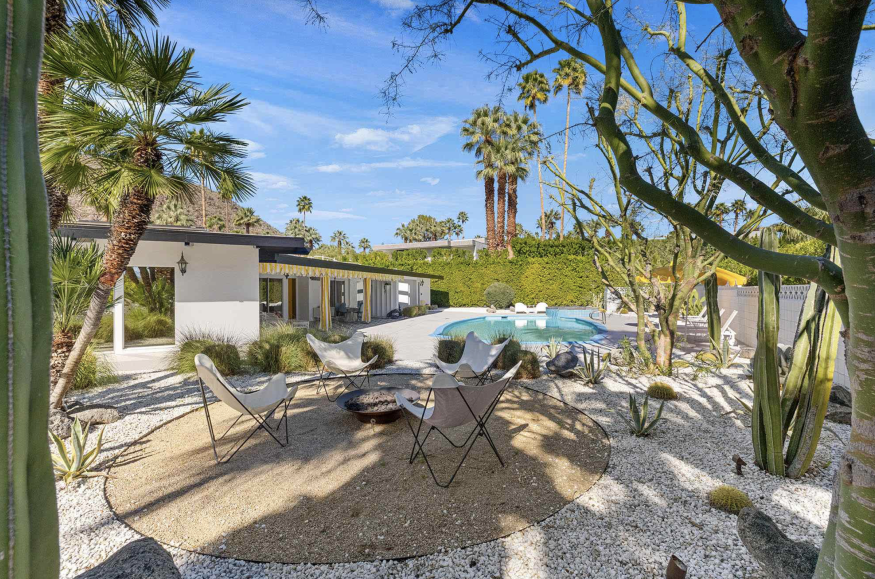
Outside, the property features a swimming pool, hot tub, fire pit, and mountain views. Together, these amenities reflect the desert lifestyle that has helped sustain demand for midcentury modern homes in the region.
Original Bathrooms Preserve the Home's Midcentury Character
Among the residence's most distinctive features are its four original bathrooms, which retain period tiles and vanities in butter yellow, light pink, and blue.
These details offer a glimpse into the color preferences and material choices associated with early 1960s residential design. Rather than relying exclusively on contemporary finishes, the bathrooms preserve elements that connect the house to its original architectural era.
The kitchen, by comparison, has been updated by a previous owner. Its white and blue cabinetry and mosaic-tile backsplash complement the palette found in the original bathrooms, helping the remodeled space maintain a visual relationship with the rest of the house.
This balance between preservation and modernization may prove particularly important as Moran begins planning the property's next phase.
Restoring a midcentury modern home does not necessarily mean returning every room to an exact historical configuration. Instead, a thoughtful approach can retain defining architectural elements while addressing the practical requirements of contemporary living.
For this residence, the original bathrooms, semicircular bar, vaulted ceilings, and extensive glazing provide a foundation for a restoration that respects the home's established identity.
Violet Moran Plans to Restore the Property
Moran has described the acquisition as a significant purchase and indicated that she intends to preserve the property's architectural character while honoring its Hollywood history.
In a statement shared after the purchase, she outlined her intention to restore the residence thoughtfully, returning it to a condition that reflects its architectural importance while ensuring its legacy remains appreciated by future generations.
Her plans place the emphasis on preservation rather than a wholesale redesign. That approach is particularly relevant for a house whose identity depends on the relationship between its original features, midcentury modern design, and reputation as a celebrity-associated property.
The challenge will be maintaining those defining elements while making any necessary updates. Original tilework, period cabinetry, architectural proportions, and characteristic interior details can contribute substantially to a home's identity. Altering them without considering the overall design can weaken the qualities that distinguish a historic residence from a more conventional property.
At the same time, restoration may involve practical considerations such as maintaining building systems, improving energy efficiency, and ensuring that outdoor amenities remain functional.
No detailed renovation timeline or comprehensive project budget has been established in the reports reviewed for this article. The final scope of work therefore remains uncertain, as does the extent to which the property will change during Moran's ownership.
Her stated commitment to preserving its original character nevertheless gives the project a clear direction.
Why Palm Springs Midcentury Modern Homes Remain in Demand
The sale also underscores the continuing appeal of Palm Springs architecture, particularly residences built during the mid-20th century.
The city became closely associated with modernist residential design through homes that emphasized geometric forms, open interiors, expansive windows, and a strong connection to the desert landscape. Architects and builders developed designs suited to the region's climate and lifestyle, creating houses that often treated outdoor areas as extensions of interior living spaces.
Vista Las Palmas remains an important part of that architectural identity. Its collection of distinctive residences attracts buyers who value both design history and the practical benefits of desert living.
Celebrity associations can add another dimension to a property's appeal, although such claims require careful verification. In the case of the so-called Marilyn Monroe Doll House, the name has helped draw attention to the residence, but its architectural features provide an independent reason for interest.
The home's original bathrooms, semicircular bar, vaulted ceilings, and expansive glazing give it a recognizable character that extends beyond its reported connection to the actress.
For buyers considering historic or architecturally significant properties, that distinction matters. A home's value may be influenced by its location, condition, design pedigree, and public reputation, but preserving its physical character can be essential to maintaining its long-term appeal.
A New Chapter for a Palm Springs Architectural Landmark
Violet Moran's $2.81 million purchase places the residence at the center of a restoration project that combines architectural preservation with a widely publicized Hollywood association.
The home's next chapter will depend on how its original details are maintained and how any updates are integrated into the existing design. For now, Moran has expressed a clear intention to respect the property's midcentury character rather than erase the features that make it distinctive.
Although questions remain about the precise nature of Marilyn Monroe's connection to the house, the residence stands as an example of the architectural style that continues to define Palm Springs. Its sale demonstrates how design history, celebrity lore, and a commitment to preservation can intersect in the luxury real estate market.
As restoration plans develop, the property's most enduring appeal may lie in its ability to retain the architectural qualities that have kept it in the public eye while adapting to a new owner's vision.


Halle Berry's Longtime Sunset Strip Home Hits the Market for Nearly $12 Million

Sad Beige Baby Trend: Why Neutral Nurseries Are Dividing Parents and Designers

Where to Buy a Christmas Tree in 2026, From Charlie Brown Chic to Ralph Lauren Classics

Marilyn Monroe's Former Palm Springs Home Sells for $2.81 Million as New Owner Plans Restoration

Sherwin-Williams's 2027 Color Forecast Unveils 48 Rich Colors to Refresh Your Home in 2027


