Make Your Kitchen More Welcoming With These 3 Pre-Holiday Upgrades
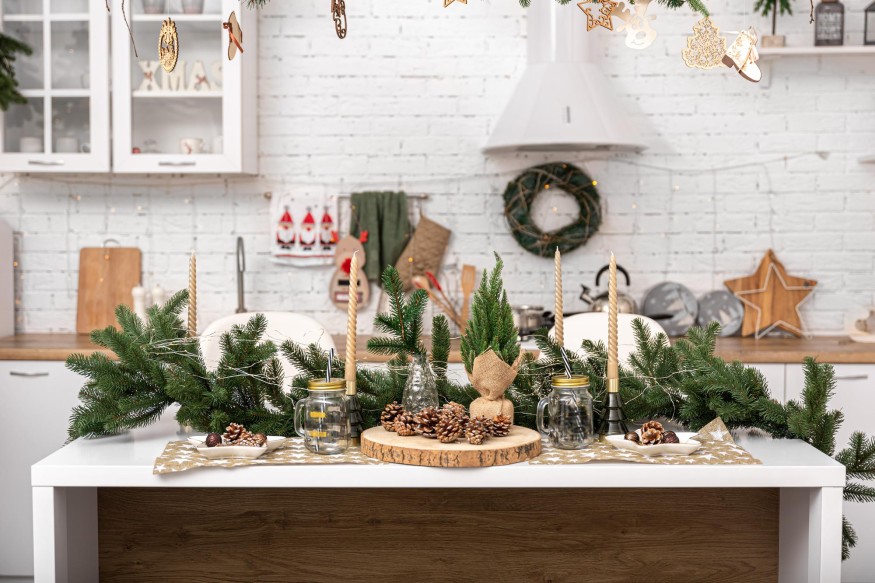
The kitchen often becomes one of the busiest areas of a home during the holiday season. Beyond preparing meals, it serves as a gathering place where family members and guests naturally spend time chatting, sharing drinks, and helping with food preparation. However, a kitchen that functions well for everyday routines may not necessarily be equipped to handle the additional demands of holiday entertaining.
Preparing the space does not always require a major renovation or expensive appliances. According to interior designers, a few carefully considered upgrades can make a kitchen more comfortable, organized, and visually appealing before guests arrive.
The most effective improvements focus on how people interact with the space. Comfortable seating encourages guests to gather without interrupting food preparation, attractive serving pieces make entertaining feel more intentional, and designated self-service stations help reduce unnecessary movement around the kitchen.
A recent feature from Homes & Gardens highlights these three practical additions as ways to improve holiday hosting while investing in pieces that remain useful throughout the year. Rather than treating the kitchen as a purely functional room, these upgrades consider its role as an important social space.
1. Introduce Comfortable Seating for Guests
One of the simplest ways to make a kitchen more welcoming is to provide a comfortable place for guests to sit.
During holiday gatherings, people often gravitate toward the kitchen regardless of where the main dining area is located. Without suitable seating, guests may end up standing around countertops, blocking access to appliances, or occupying areas needed for meal preparation.
Interior designer Melissa Dyckman recommends creating a dedicated spot where visitors can relax while someone is cooking. The arrangement does not need to be elaborate. A few well-designed counter stools, a small breakfast table, or a compact dining nook can make the kitchen more accommodating.
For kitchens with islands, counter stools with supportive backs are particularly practical. They allow guests to remain comfortable during longer conversations while keeping the main dining area available for food preparation.
Spacing is equally important. A kitchen island should have enough clearance behind the seating area to accommodate movement. The Homes & Gardens feature notes that approximately 42 to 48 inches of clearance is a useful guideline behind island seating, although the appropriate dimensions depend on the layout and traffic requirements.
Homes without islands can explore alternative arrangements. A small round table with two or four chairs can create a casual gathering area without requiring significant structural changes. Built-in banquette seating is another option for kitchens with an unused corner or alcove.
2. Invest in Attractive Serveware That Doubles as Decor
Holiday hosting often involves serving multiple dishes, snacks, desserts, and drinks throughout the day. While practical serving pieces are essential, designers suggest choosing items that also contribute to the kitchen's overall appearance.
A sculptural serving platter, oversized marble board, decorative cake stand, or attractive ceramic bowl can make a countertop look more intentional even when it is not being used for entertaining.
Interior designer Kathy Kuo recommends having at least one standout serving piece that can function as both a practical accessory and a decorative feature. An oversized marble board, for example, can hold a charcuterie arrangement during a gathering and remain displayed on the kitchen island afterward.
This approach makes serveware a more versatile investment. Instead of purchasing decorative items that only come out during special occasions, homeowners can select pieces that work as part of their everyday kitchen styling.
Material selection helps establish the desired aesthetic. Marble and natural stone introduce visual weight and subtle pattern, while handcrafted ceramics offer a softer, more artisanal appearance. Wooden serving boards can complement kitchens with natural cabinetry, exposed shelving, or warm neutral finishes.
The most effective arrangements avoid overcrowding. A single sculptural serving piece can be displayed with a small stack of cookbooks, a vase, or a pair of candlesticks. This creates a styled countertop without sacrificing too much usable surface area.
For holiday entertaining, serveware should also be selected according to the menu and the number of guests. Larger platters are useful for shared dishes, while smaller bowls can accommodate snacks, condiments, and individual portions.
Homeowners can explore the designer-inspired kitchen entertaining ideas from Homes & Gardens for examples of how decorative serveware can combine everyday function with seasonal presentation.
3. Create Self-Service Stations for Drinks and Snacks
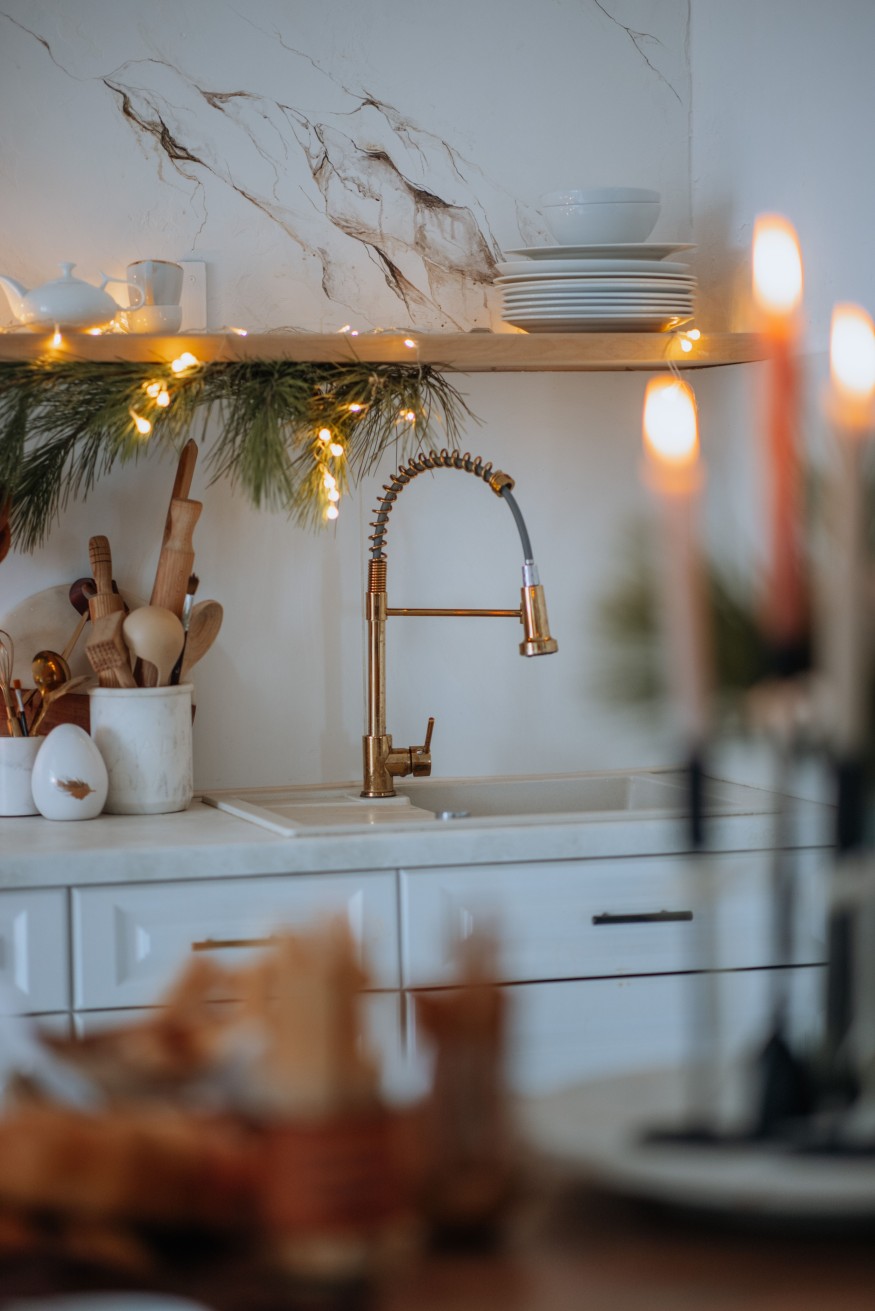
One of the biggest challenges of hosting is managing guests' requests while preparing meals. A dedicated self-service station can reduce interruptions and give visitors more freedom to help themselves.
Coffee stations are particularly useful during holiday mornings, when guests may wake up at different times and prefer different beverages. A small section of countertop or a narrow sideboard can accommodate a coffee machine, mugs, teaspoons, sugar, tea bags, and other essentials.
Interior designer Brittny Button recommends taking inspiration from hotel-style buffet arrangements. The idea is to organize frequently used items into designated areas so guests can find what they need without constantly asking the host for assistance.
The same principle can be applied to snacks and refreshments. A tray with glasses, a water pitcher, and bottled drinks can create a simple beverage station, while a separate arrangement can hold packaged snacks, fruit, and breakfast essentials.
For kitchens with limited countertop space, a compact rolling cart or freestanding shelving unit can provide additional storage. Baskets and labeled containers help keep supplies organized while making the station visually cohesive.
Placement is important. A self-service area should be accessible without obstructing the cooking zone or creating congestion around the refrigerator and sink. Positioning it slightly away from the main food preparation area allows guests to move independently while the host works.
Make the Kitchen Ready for More Than One Holiday
Although these upgrades are particularly useful during Thanksgiving and Christmas gatherings, their benefits extend beyond the festive season.
Comfortable seating makes everyday family interactions easier, attractive serveware can enhance ordinary meals, and self-service stations help households organize daily routines more efficiently.
The most successful kitchen improvements are those that balance appearance with practical requirements. A beautiful serving platter has little value if it takes up essential preparation space, just as additional seating can become inconvenient if it obstructs movement.
Before purchasing anything, homeowners should assess how their kitchens currently function. Identifying areas where guests tend to gather, locating unused corners, and evaluating available countertop space can help determine which upgrades will make the greatest difference.
A more welcoming kitchen does not depend on a complete renovation. With thoughtful seating, versatile serveware, and well-organized self-service stations, the space can become better equipped for entertaining while retaining its everyday functionality.
Frequently Asked Questions
1. What should be upgraded in a kitchen before hosting for the holidays?
Comfortable guest seating, attractive serving pieces, and designated self-service stations are three practical improvements that can make holiday hosting easier and more organized.
2. How much space should be left behind kitchen island seating?
Approximately 42 to 48 inches is a useful planning guideline behind island seating, although the ideal clearance depends on the kitchen layout and the amount of foot traffic.
3. How can a small kitchen accommodate holiday guests?
A small kitchen can benefit from compact counter stools, a small breakfast nook, multipurpose serving pieces, and a self-service station arranged on a narrow cart or sideboard.
4. How can a kitchen look more inviting without a renovation?
Decorative serveware, coordinated countertop accessories, comfortable seating, organized beverage stations, and thoughtful lighting can improve the atmosphere without requiring structural changes.


These 11 Bedroom Design Trends Will Make Your Space Feel More Elevated

Why Designers Are Trading Cool Gray for These Richer, Warmer Shades

Designers Ditching Perfectly Minimal Kitchens for This Lived-In Look

Bella Hadid Buys $5.5 Million Colorado Mountain Home in Crested Butte

Move Over, Bows: Tassels Are Bringing Texture and Luxury to Christmas Decor in 2026


