Farrow & Ball’s New Heritage Wallpapers Bring Historic Patterns Into Modern Homes
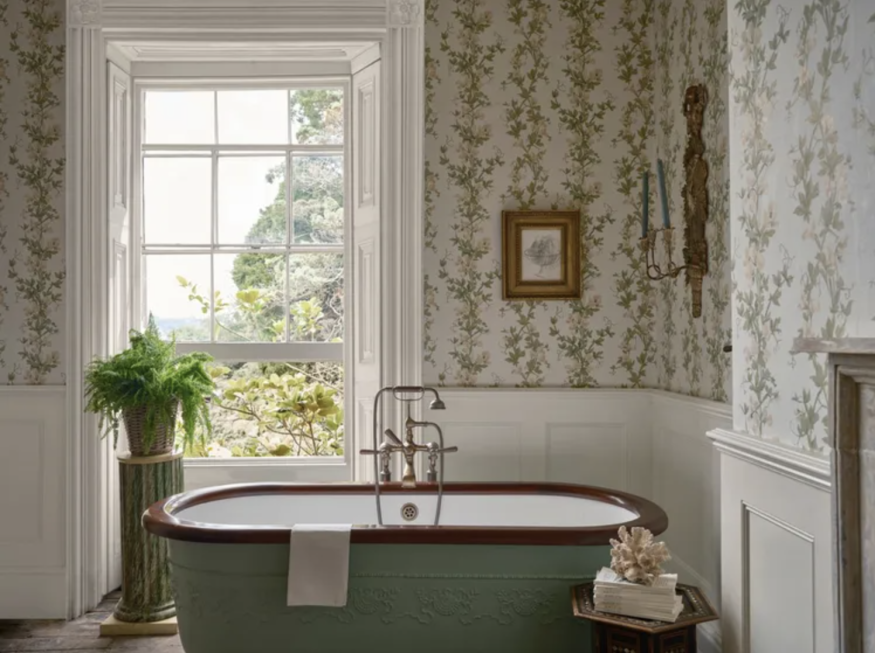
Historic wallpaper patterns can make a room feel instantly layered, but traditional prints can sometimes look as though they belong to another era. Farrow & Ball is addressing that tension with a new collection of heritage wallpapers that draws from the brand's archive while giving familiar decorative motifs a more contemporary presence.
The collection revisits patterns connected to Farrow & Ball's history, translating archival designs into wallpapers intended for modern interiors. The result is a selection that retains the character of historic decoration without requiring homeowners to create a strictly period-style room.
For homeowners interested in traditional interiors, the collection also illustrates a broader design approach: instead of treating historic patterns as something that must be replicated exactly, designers can use them as a starting point for creating spaces that feel collected and current.
Farrow & Ball Looks to Its Archive for Wallpaper Inspiration
Farrow & Ball has long been associated with color, but its wallpapers have become an important part of the brand's approach to interior design. The new heritage collection continues that relationship with the past by revisiting archival patterns and bringing them into a current decorating context.
Rather than introducing historic motifs as museum-like reproductions, the collection allows recognizable decorative elements to work alongside contemporary furniture, modern architectural details, and simpler finishes.
That distinction matters because wallpaper can dramatically shape a room's character. A heavily patterned wall can become the dominant feature, while a smaller-scale heritage print can provide texture and visual interest without overwhelming the rest of the space.
The collection therefore offers an alternative to the idea that traditional wallpaper needs to be paired with equally traditional furnishings.
Why Heritage Wallpaper Is Having a Modern Moment
One reason historic-inspired wallpaper continues to appeal to homeowners is its ability to introduce visual history into a newly decorated space.
Modern homes can sometimes lack the architectural details found in older properties, such as ornate moldings, paneling, carved woodwork, or decorative ceilings. Wallpaper can help add another layer of detail without requiring structural changes.
Heritage patterns can also make rooms feel less dependent on short-lived decorating trends. Botanical motifs, repeating geometrics and decorative flourishes have appeared in interiors for generations, giving them a longevity that many trend-driven prints do not necessarily have.
The key is how you use the pattern.
A traditional wallpaper can feel surprisingly contemporary when it is surrounded by clean-lined furniture, restrained accessories, and uncomplicated lighting. Instead of recreating an entire historical period, the wallpaper becomes one traditional element within a more eclectic room.
5 Ways to Make Historic Wallpaper Feel Fresh
- Pair it with modern furniture: A heritage wallpaper can provide contrast against streamlined sofas, contemporary dining chairs, or minimalist case goods.
- Use it in an unexpected room: Traditional patterns do not have to be limited to formal living rooms. A powder room, entryway, bedroom, or home office can provide an opportunity to use a more decorative print.
- Choose contemporary color combinations: Color can dramatically change a historic pattern's character. Softer neutrals can make it understated, while deeper or unexpected shades can make the same motif more dramatic.
- Avoid matching everything: Repeating the wallpaper's colors throughout every piece of furniture and accessory can make the room feel overly coordinated. A mixture of complementary tones generally creates a more relaxed result.
- Try it on one architectural feature: Covering a single wall, alcove, or recessed area can introduce the pattern without committing an entire room to it.
Heritage Patterns Can Add Character to Newer Homes
Wallpaper is particularly useful in newer homes where architectural character may be limited.
A newly constructed house can have excellent proportions and contemporary finishes while still feeling visually plain. Introducing a historic-inspired wallpaper can provide some of the decorative complexity associated with older interiors.
This approach can work particularly well in dining rooms, libraries and hallways, where patterned walls traditionally have a strong presence. Smaller spaces can also be useful because homeowners can experiment with bolder designs without committing to large expanses of wallpaper.
In an entryway, for example, a heritage pattern can establish a decorative direction for the rest of the home. In a bedroom, it can create a softer backdrop behind the bed. A powder room can handle an especially expressive pattern because its smaller footprint makes a stronger decorative statement possible.
The goal is not necessarily to make a new home look old. Instead, historic wallpaper can help introduce visual depth and a sense of permanence.
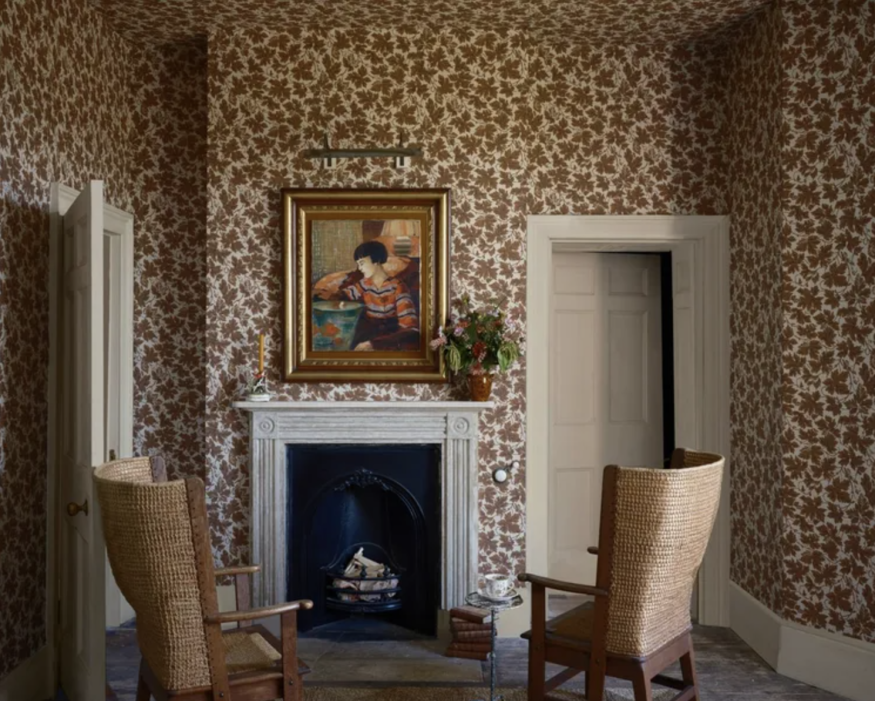
How to Mix Heritage Wallpaper With Contemporary Decor
The easiest way to keep traditional wallpaper from feeling dated is to avoid creating a room where every element belongs to the same period.
A historic-inspired print can sit comfortably beside contemporary lighting, modern artwork, and simpler furniture. Natural materials such as wood, linen, stone and woven fibers can also prevent a patterned room from feeling overly formal.
Scale is another consideration. Large-scale patterns can create a dramatic focal point, while smaller repeating designs can provide a quieter backdrop. The right choice depends on the room's size, ceiling height, and natural light.
Consider color in relation to the rest of the interior. Wallpaper doesn't need to match the furniture exactly. Pulling one or two tones from the pattern into nearby textiles or accessories can create cohesion without making the room look overly coordinated.
Why Historic Wallpaper Can Have Staying Power
Decorating with heritage-inspired wallpaper is not necessarily about following a trend. Its appeal comes partly from the fact that many traditional motifs have proven their ability to stay relevant across different periods of interior design.
That makes them particularly useful for homeowners who want a room to feel distinctive without relying entirely on contemporary trends.
Farrow & Ball's new collection highlights how archival design can be adapted rather than simply reproduced. By placing historic-inspired patterns in modern rooms, homeowners can create interiors that acknowledge traditional decoration while still reflecting how people live today.
Frequently Asked Questions
1. What are heritage wallpapers?
Heritage wallpapers are designs inspired by historic decorative patterns, archives, or traditional printing techniques. They often feature motifs such as florals, botanicals, geometrics, and other patterns associated with earlier periods of interior design.
2. Can traditional wallpaper work in a modern home?
Yes. Traditional wallpaper can work particularly well when paired with contemporary furniture, modern lighting, and simpler accessories. The contrast can help the historic pattern feel more current.
3. Where can heritage wallpaper be used?
You can use heritage wallpaper throughout a home, including living rooms, bedrooms, dining rooms, hallways, entryways, home offices, and powder rooms. Smaller spaces can be especially effective for more decorative patterns.
4. Does traditional wallpaper make a room look old-fashioned?
Not necessarily. Surrounding furniture, lighting, color palette, and styling strongly influence how wallpaper is perceived. A historic pattern can look contemporary when paired with modern, understated elements.


Dunn-Edwards' 2027 Color of the Year Is a Rich Brown With a Subtle Plum Undertone

6 Timeless Home Décor Choices That Will Still Look Good 10 Years From Now

Brise-Soleil Is Back: The Architectural Sun-Shading Feature Designers Are Using Again

How Breezeways Are Transforming Modern Homes With Air, Light and Outdoor Connection

Tyler Perry's 22.5-Acre Beverly Hills Estate Hits the Market for $57 Million


