The 8x10 Rule That Could Make Your Family Photo Displays Look More Stylish
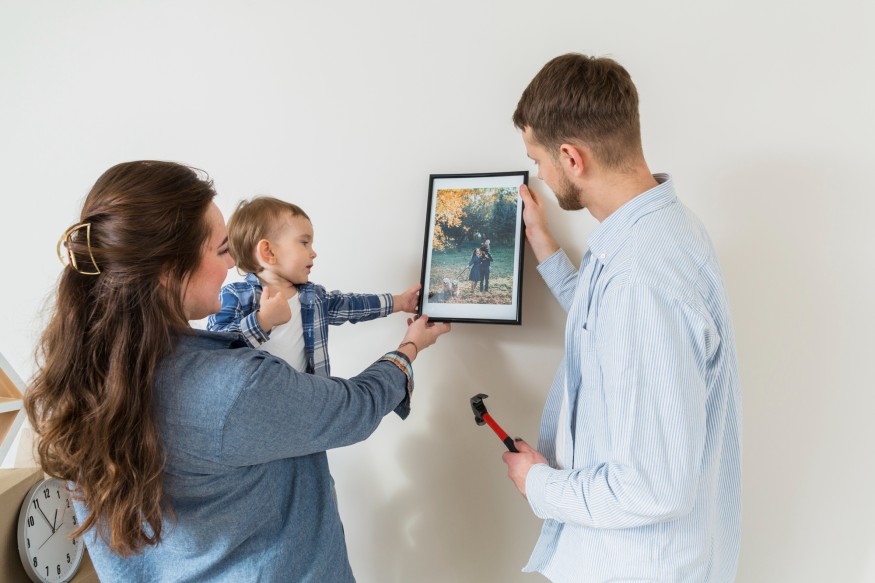
Family photographs are among the most personal decorative elements that can be introduced into a home. Unlike commercially produced artwork or decorative accessories, portraits capture meaningful experiences, relationships, and moments that homeowners may want to revisit every day.
However, deciding how to display these photographs can be more complicated than simply choosing a frame and finding an empty wall.
An oversized family portrait can easily become the dominant feature of a living room, while a collection of smaller photographs can create a more intimate and understated display. The difference often comes down to scale, placement, and the way photographs interact with the surrounding interior.
Photographer Andia Ahedo has a particularly interesting perspective on the subject. Her number one recommendation is to keep traditional, directly posed family portraits relatively small, suggesting a maximum print size of 8x10 inches in common areas.
The advice offers an alternative to the oversized family photographs that were once frequently displayed above fireplaces, pianos, and prominent living room furniture.
Rather than making portraits the focal point of an entire room, Ahedo believes they should serve as subtle reminders of meaningful memories.
Her perspective, shared in a social media post and reported by Good Housekeeping in November 2026, provides an interesting starting point for homeowners looking to incorporate personal photographs into their decorating schemes.
Why the 8x10 Rule Makes Sense
Ahedo's recommendation focuses particularly on photographs in which everyone is looking directly at the camera.
These portraits often have a formal quality, making them feel more prominent when printed at an unusually large scale. In a shared living space, an oversized image can become visually dominant, drawing attention away from the furniture, artwork, and other elements of the room.
The photographer also raises an interesting consideration about the experience of guests. A large, direct-to-camera portrait can create an unusual visual presence in a room where visitors are trying to relax and interact with one another.
Keeping traditional family photographs at 8x10 inches or smaller allows them to remain visible without demanding attention.
This does not mean that family portraits should be hidden away or excluded from carefully designed interiors. Instead, the idea is to consider their scale in relation to the room.
A photograph can still have emotional significance without occupying an entire wall.
How to Display Portraits Without Making Them Feel Overwhelming
The 8x10 recommendation is particularly useful for homeowners who want their photographs to complement an existing decorating scheme.
Several display techniques can make smaller portraits feel intentional and visually appealing.
1. Use Oversized Mats
One of Ahedo's suggestions is to place an 8x10 photograph inside a larger frame with generous matting.
For example, a smaller print can be positioned within a 16x20-inch frame, creating more negative space around the photograph.
This technique gives the display a gallery-like quality while maintaining the understated scale of the image itself.
The larger frame also creates an opportunity to introduce decorative finishes, including natural wood, brushed metal, or simple black borders.
2. Create a Balanced Gallery Wall
A collection of family photographs can be displayed together without making any single image overwhelming.
A gallery wall works particularly well along staircases, hallways, and large living room walls.
Ahedo mentions using a grid of 12 frames in her stairwell, with oversized mats surrounding smaller 8x10 prints. The symmetrical arrangement gives the collection a consistent appearance while allowing each photograph to remain relatively understated.
Homeowners can replicate the effect using matching frame dimensions or a combination of coordinated styles.
3. Mix Frame Styles and Sizes
Not every photograph needs to be presented in an identical frame.
Ahedo also recommends mixing frame and mat sizes throughout the home, creating displays that feel more collected than formally coordinated.
Wood frames can introduce warmth, while black and metallic finishes offer a more contemporary appearance.
The important consideration is maintaining a visual connection between the different pieces through shared colors, materials, or proportions.
Why Candid Photographs Can Be Displayed Differently
Although Ahedo recommends keeping formal family portraits relatively small, she makes an exception for candid photographs and silhouette-style images.
These photographs capture people in more natural situations, such as laughing, talking, playing, or participating in everyday activities.
Because they often feel less formal than posed portraits, they can be displayed at slightly larger dimensions without creating the same visual effect.
Ahedo suggests that candid photographs can work at sizes up to 11x14 inches.
This distinction is useful when selecting images for different rooms. A formal family portrait may work best on a smaller shelf or within a carefully arranged gallery wall, while a photograph capturing a spontaneous moment can become a more prominent decorative feature.
Candid images also provide an opportunity to introduce more personality into an interior. They show the relationships and everyday experiences that make a home feel lived in.
Choosing the Right Location for Family Photographs
The placement of a photograph is just as important as its dimensions.
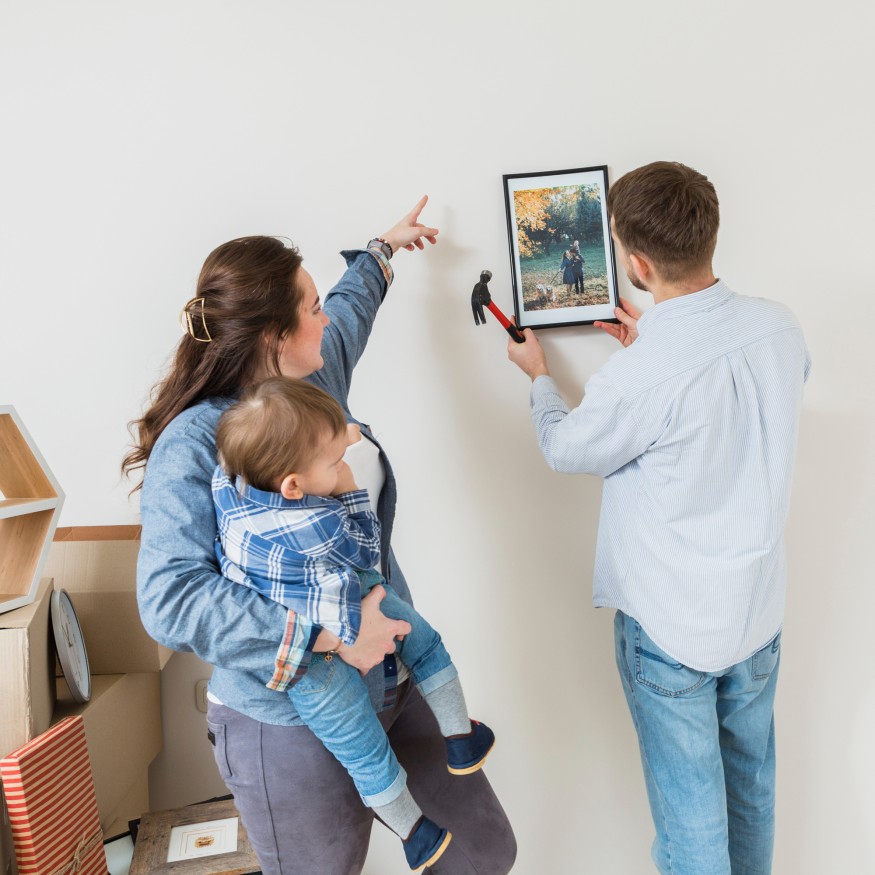
Living rooms, hallways, staircases, bedrooms, and home offices can all accommodate family photographs, but each space offers different display opportunities.
In a living room, smaller framed photographs can be arranged on bookshelves, side tables, or consoles. This allows homeowners to incorporate personal details without competing with larger artwork or architectural features.
Hallways and staircases are particularly suitable for gallery walls because they provide opportunities to display several photographs in a relatively contained area.
Bedrooms offer a more private setting for meaningful portraits. Photographs placed on bedside tables or dressers can create a personal atmosphere without needing to become major decorative features.
Lighting should also be considered. Direct sunlight can contribute to fading in some photographic prints, so positioning valuable images away from strong sunlight can help preserve them.
Let Meaningful Photographs Become Part of the Interior
Displaying family portraits is ultimately a personal design decision. There is no universal rule requiring every home to follow the same dimensions, frame styles, or arrangement.
However, Ahedo's recommendation offers a useful reminder that meaningful photographs do not always need to be oversized to make an impression.
Smaller prints, thoughtful matting, and carefully arranged gallery walls can create displays that feel both personal and visually balanced.
Rather than allowing formal portraits to dominate a room, homeowners can use them to introduce warmth, character, and memories into their interiors. The result is a home that feels decorated with intention while preserving the emotional significance of the photographs themselves.
Frequently Asked Questions
1. What is the 8x10 rule for displaying family portraits?
Photographer Andia Ahedo recommends keeping traditional, directly posed family portraits at 8x10 inches or smaller, particularly when displaying them in shared living spaces.
2. Can family photographs be displayed in larger frames?
Yes. A smaller photograph can be placed inside a larger frame with generous matting. This creates a more substantial decorative presentation without enlarging the actual portrait.
3. Are candid family photographs suitable for oversized frames?
Candid photographs can work at slightly larger sizes because they often feel more natural and less formal. Ahedo suggests that some candid and silhouette-style images can be displayed at up to 11x14 inches.


Bella Hadid Buys $5.5 Million Colorado Mountain Home in Crested Butte

Lady Gaga's Former NYC Penthouse in the Historic Hit Factory Lists for $6.995 Million

Brussels Furniture Fair 2026 Showcases New Collections and European Design

Thinking About DIY Home Repairs? These Unexpected Costs Could Change Your Mind

Move Over, Bows: Tassels Are Bringing Texture and Luxury to Christmas Decor in 2026


