Rollo Studio’s U Collection Makes Geometric Lighting a Sculptural Statement
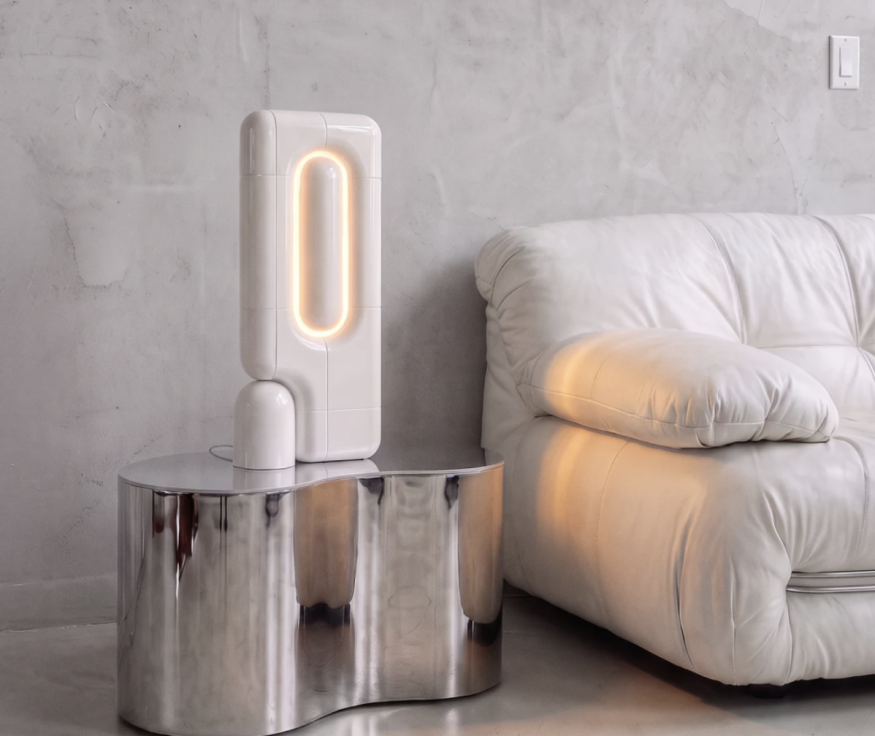
Geometric shapes are taking on a more expressive role in contemporary lighting design, turning functional fixtures into sculptural elements that influence the character of a room. Spanish design studio Rollo Studio explores this relationship through its U Collection, a series of lighting pieces and objects that combine rounded forms, high-gloss finishes and digitally fabricated components.
Designed by studio founder Rollo Bryant, the collection comprises nine pieces, including pendant lights, table lamps, ambient lamps, a wall light and a side table. The designs share a visual language built around curved, repeated elements, allowing the collection to maintain a consistent identity across different fixture types.
Introduced in 2026, the range also explores how digital manufacturing can work alongside hands-on finishing. Each piece is 3D-printed in plant-based polylactic acid, or PLA, before being sanded, painted and assembled in the studio's Valencia workshop.
The result is a collection in which geometry, surface treatment and color contribute as much to the visual effect as the fixtures' practical purpose.
Rounded Geometry Gives Lighting a Sculptural Quality
The U Collection is based on a recurring curved-tile module that gives the pieces their distinctive appearance. Rather than relying on elaborate ornament or complicated silhouettes, the designs build their character through repeated forms and carefully controlled proportions.
The approach allows the collection to move between different scales. Pendant lights provide a focal point overhead, while table and ambient lamps offer smaller sculptural elements for shelves, side tables and other surfaces. The wall light extends the same design language to vertical surfaces.
This consistency can be useful when selecting lighting for a coordinated interior. Fixtures do not necessarily need to match exactly, but repeating related shapes can help establish a visual connection between different areas of a room.
The collection also demonstrates how geometric design can feel soft rather than rigid. Rounded contours and repeated curves create a different effect from the sharp edges and straight lines associated with more strictly rectilinear lighting.
In contemporary interiors, these contrasting approaches can serve different purposes. Angular fixtures may reinforce architectural lines, while curved designs can soften rooms dominated by square furniture, hard surfaces and regular layouts.
The appeal of sculptural lighting lies in this ability to operate on two levels: providing illumination while contributing to the composition of a space.
High-Gloss Finishes Highlight Shape and Color
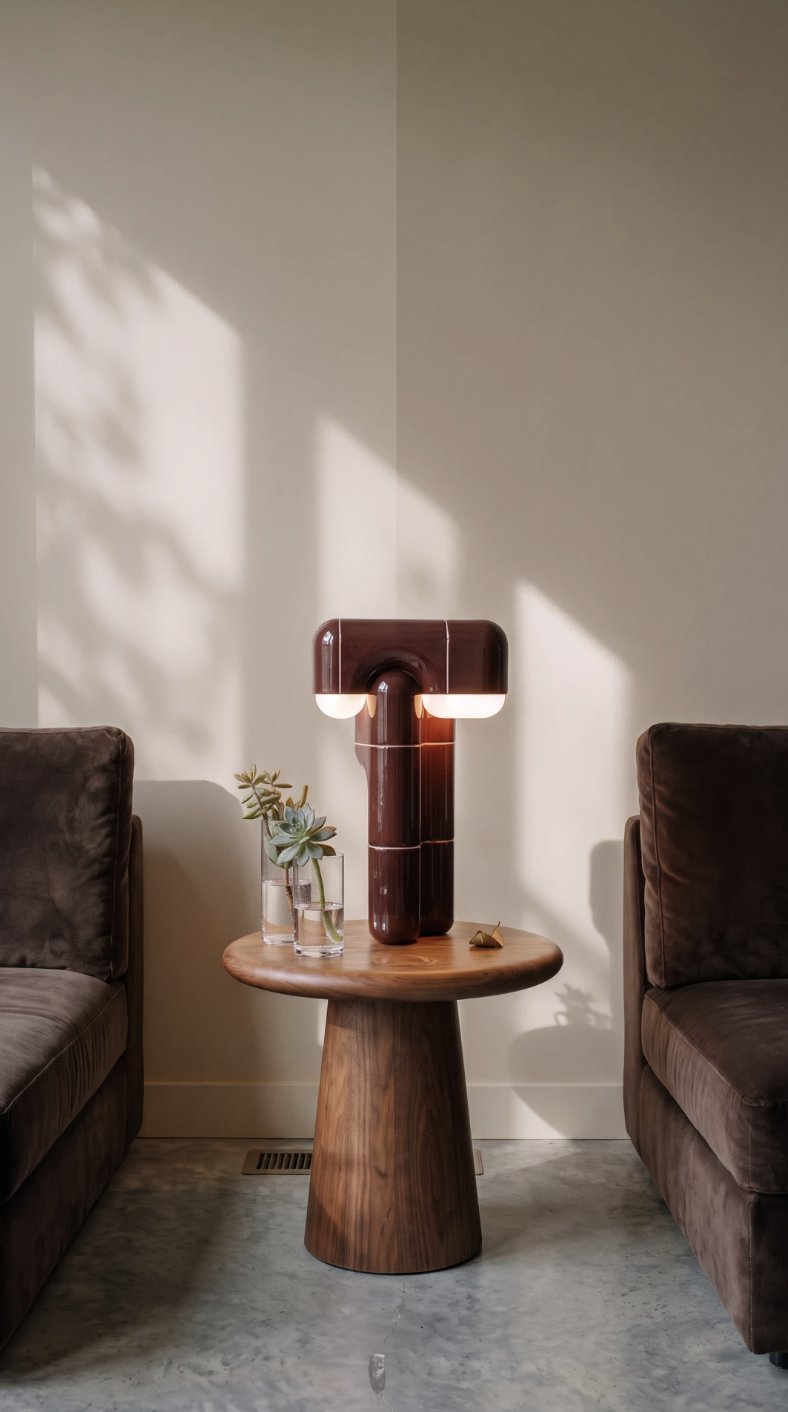
Surface treatment is another defining feature of the U Collection. After printing, each component is sanded, painted and finished with a high-gloss clear coat.
The glossy surface reflects light and emphasizes the contours of the individual forms. It also gives the fixtures a polished appearance that differs from the rougher, more visibly layered texture often associated with additive manufacturing.
The studio offers the collection in 35 curated colors, with additional options available through the RAL color-matching system. This allows the fixtures to be coordinated with existing wall colors, upholstery, cabinetry or other finishes.
Color can substantially influence how a lighting fixture appears within a room. A neutral finish can help a sculptural lamp sit comfortably among other furnishings, while a saturated shade can turn it into a visual focal point.
For a cohesive scheme, designers can repeat a fixture's color elsewhere through accessories, artwork or smaller decorative details. Alternatively, a contrasting color can create emphasis without requiring a major change to the surrounding interior.
The collection's glossy finish makes color particularly prominent, as reflections can change the way a surface is perceived under different lighting conditions.
Visible Grout Lines Add Material Contrast
One of the collection's more distinctive details is its use of visible grout between assembled sections. Rather than concealing the joints, Rollo Studio incorporates them into the finished design.
The decision introduces a visual contrast between the smooth, reflective surface and the narrow lines that separate the individual components. It also recalls tiled construction, where grout traditionally marks the boundaries between repeated units.
This treatment gives the fixtures a sense of assembly and material structure. The forms are not presented as entirely seamless objects, but as compositions built from smaller parts.
The detail is especially relevant to contemporary product design, where manufacturing methods are increasingly allowed to influence the appearance of finished objects. Visible joints, layered surfaces and repeated modules can communicate how an item is constructed instead of disguising the production process.
In the U Collection, this approach creates a balance between digital fabrication and manual finishing. The components are printed using technology, but sanding, painting, assembly and grouting remain part of the studio's production process.
Digital Manufacturing Meets Hands-On Finishing
Rollo Studio's process illustrates how 3D printing can expand the possibilities of lighting design. The technology makes it possible to produce repeated, carefully controlled forms while allowing the designer to develop shapes that may be difficult to achieve through conventional manufacturing alone.
However, the printed components are not treated as finished products straight from the machine. They undergo additional preparation and surface treatment before being assembled and fitted with lighting components.
According to the studio's official U Collection information, the pieces use integrated, dimmable LED lighting, with warm color-temperature options of 2,000K or 2,700K. The studio also produces the collection to order in Valencia, with a stated lead time of four to six weeks.
The combination of manufacturing technology and manual work is part of a broader design approach in which the production method becomes integral to the object's identity.
The material choice also deserves attention. PLA is a plant-based plastic commonly used in 3D printing, but its use alone does not establish the overall environmental performance of a finished product. Durability, energy consumption, repairability, packaging and the product's end-of-life treatment also influence its environmental impact.
For designers specifying lighting, these considerations matter alongside appearance and technical performance.
How Geometric Lighting Can Work in a Home
The collection offers a useful example of how geometric fixtures can be incorporated into residential interiors.
A pendant with a strong sculptural profile can anchor a dining area, particularly when its proportions suit the table below it. In living rooms, table and ambient lamps can introduce repeated shapes at different heights, creating visual continuity without relying on identical fixtures.
Wall lights can emphasize vertical surfaces, while a carefully selected finish can connect the fixture to the wider color scheme.
Scale is important. A large sculptural pendant may overwhelm a compact room, while a small lamp can lose its impact when placed among oversized furniture or numerous decorative objects. The fixture should be evaluated in relation to ceiling height, available space and the amount of illumination required.
Light quality also matters. A fixture's appearance does not necessarily indicate how effectively it illuminates a room. Buyers should consider brightness, color temperature, dimming capability and whether the light is directed downward, diffused through a shade or used primarily to create atmosphere.
For task lighting, such as reading or preparing food, the fixture should provide suitable illumination for the activity. Decorative lighting can then supplement the practical light sources.
A More Expressive Approach to Contemporary Lighting
Rollo Studio's U Collection shows how repeated geometric forms, reflective finishes and visible construction details can give lighting a distinct architectural presence.
Its nine-piece range uses a consistent visual language while offering different fixture types and a broad choice of colors. The combination of 3D printing and manual finishing also demonstrates how digital production can be integrated into a design-led manufacturing process.
For interiors, the collection illustrates a wider principle: lighting can contribute to a room's visual identity as well as its functionality. When proportion, color, material and light quality are considered together, a fixture can become an integral part of the overall design rather than a purely practical addition.


Marilyn Monroe's Former Palm Springs Home Sells for $2.81 Million as New Owner Plans Restoration

Where to Buy a Christmas Tree in 2026, From Charlie Brown Chic to Ralph Lauren Classics

Lion Green Road Wins the Stirling Prize for Its Innovative Approach to Housing

A Frank Lloyd Wright Landmark Reopens After Years of Restoration in Florida

Three Architecture Firms Win Competition for Cultural Hub in UNESCO-Listed Valle Camonica


