Open Shelving Ideas: How to Mix Decorative Objects for a Balanced Display
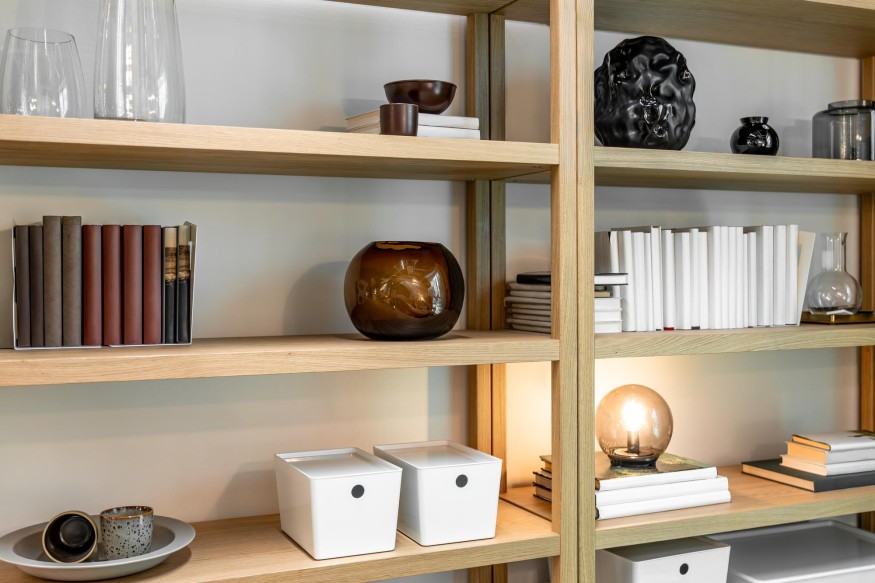
Open shelving can make a room feel lighter and more personal, providing space to display books, ceramics, artwork, and meaningful objects. Yet arranging these pieces in a way that feels intentional rather than cluttered can be surprisingly challenging. Even an attractive collection can appear flat when every object has a similar height or when too many accessories compete for attention.
The secret to successful shelf styling lies in the relationship between objects. Differences in height, shape, texture, and visual weight introduce contrast, while repeated colors and materials help the arrangement feel cohesive. Negative space is equally important, allowing individual pieces to stand out instead of disappearing into a crowded display.
Whether the shelves occupy a living room, kitchen, bedroom, or home office, thoughtful composition can turn practical storage into a distinctive interior design feature.
Creating Visual Rhythm Through Height and Proportion
A shelf filled with objects of similar heights can appear monotonous, particularly when the arrangement stretches across a long wall. Introducing variation creates visual movement and encourages the eye to travel naturally across the display.
Tall vases, upright framed artwork, and sculptural branches can provide vertical emphasis, while low bowls, horizontal book stacks, and compact accessories introduce contrasting proportions. The difference between these forms makes the arrangement more dynamic without requiring a large number of objects.
Scale matters as much as height. A tall, narrow vase creates a different effect from a shorter, wider vessel, even when both occupy a similar amount of space. Combining contrasting proportions helps the display feel more considered.
Why Contrasting Shapes Make a Display More Interesting
The geometry of decorative objects can influence the entire character of a shelf. Rectangular books, square boxes, and framed prints introduce straight lines, while rounded ceramics and sculptural accessories soften their appearance.
A curved vase beside a stack of books, for example, creates contrast between organic and angular forms. A rounded bowl can interrupt the straight lines of a shelving unit, making the overall arrangement feel less rigid.
Irregular shapes can also introduce a natural quality, particularly when paired with materials such as wood, stone, or textured ceramics.
However, contrast works best when it feels intentional. An unusual object should contribute something to the arrangement through its form, material, color, or personal significance. Introducing too many unrelated shapes can make the shelf feel disjointed rather than expressive.
Balancing Visual Weight Without Relying on Symmetry
Well-composed shelving does not require identical objects at opposite ends. Instead, balance comes from distributing visual weight across the display.
A large, dark ceramic vessel may attract more attention than several smaller, pale accessories. Placing another substantial object directly beside it could make that section feel crowded, even if the shelf has plenty of physical space.
Pairing the vessel with a horizontal stack of books or a small, light-colored object can create a more balanced arrangement. The contrasting shapes and sizes prevent the larger piece from overwhelming its surroundings.
Layering Accessories to Create Depth
Objects arranged in a single line along the front edge of a shelf can make the display look flat. Introducing depth creates a more layered appearance and allows individual pieces to interact visually.
Framed artwork can lean against the wall behind a small decorative object, while books placed horizontally can provide a low platform for a ceramic vessel. These arrangements establish different visual planes without requiring complicated styling.
Depth should be appropriate to the shelf's dimensions. Generously sized shelves can accommodate layered compositions, while narrow ones benefit from simpler arrangements that preserve usable space.
The goal is to create a display that feels dimensional while remaining practical for everyday life.
Bringing Color and Texture Into the Arrangement
Color can connect objects that differ considerably in shape and size. Repeating a few complementary shades throughout the shelving unit creates continuity without requiring every accessory to match.
A neutral arrangement might combine cream ceramics, natural wood, and muted green accents. A more colorful interior could use books, artwork, and decorative objects to repeat a few stronger tones across the shelves.
Texture provides another layer of interest. Smooth glass, matte ceramics, woven materials, and natural wood create contrasts that remain noticeable even within a limited color palette.
Repetition is most effective when it occurs in different forms. A wooden picture frame, a carved bowl, and a small timber sculpture can share a material while contributing different shapes and functions.
This approach creates a collected appearance rather than the uniform look of a matching accessory set.
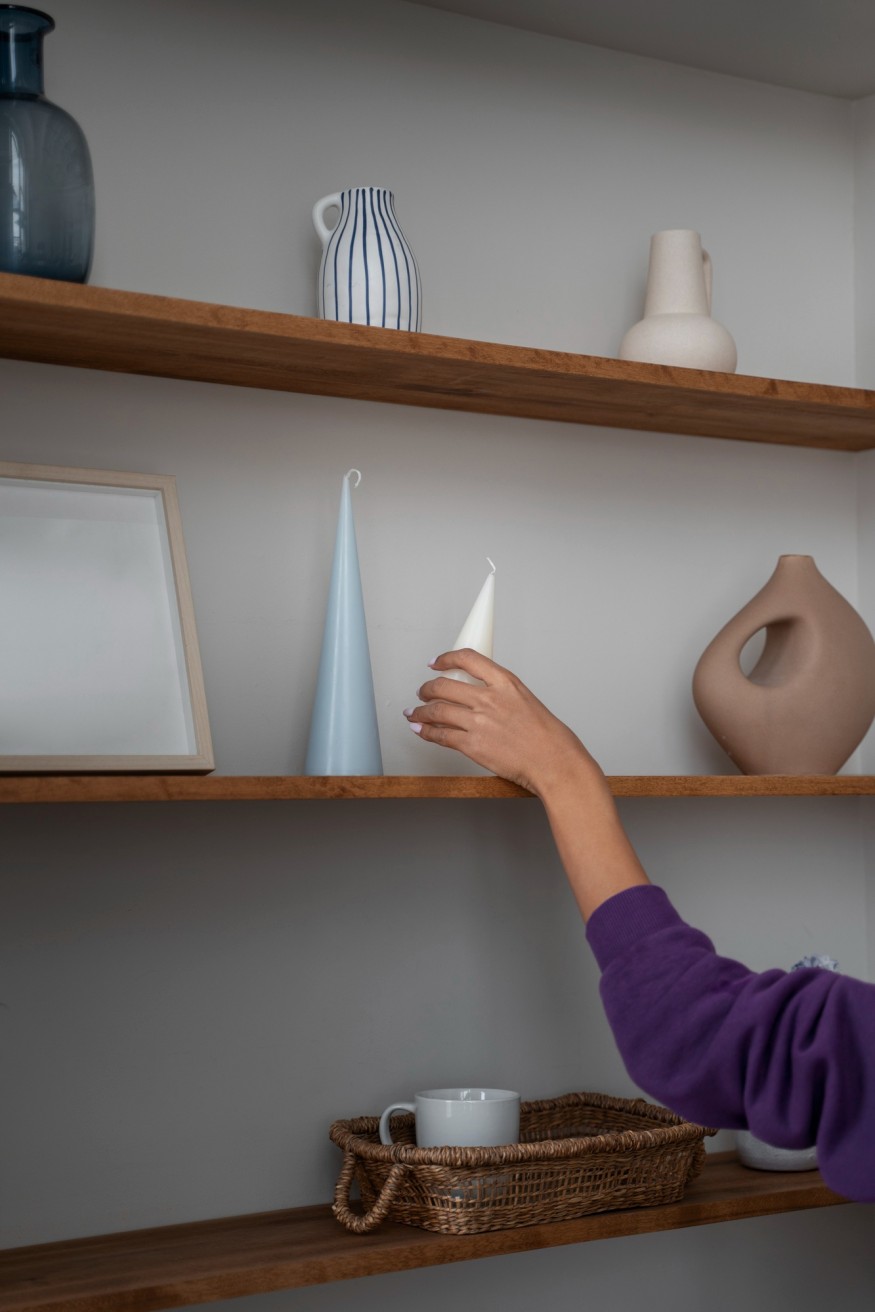
The Importance of Negative Space
One of the most common shelf-styling mistakes is treating every empty area as an invitation to add another accessory. Filling all available space can make even carefully selected objects lose their individual impact.
Negative space gives the eye room to rest and allows distinctive pieces to become focal points. It also creates a sense of proportion between objects, helping the display feel balanced rather than crowded.
Making Open Shelves Feel Personal
The most memorable displays often include objects that reflect the people who live in the home. Favorite books, travel souvenirs, inherited ceramics, framed photographs, and handmade pieces can introduce character that purely decorative accessories may lack.
These objects do not need to share identical finishes or come from the same design collection. Repeating a color, material, or shape can help connect them while preserving their individuality.
Creating Open Shelves That Feel Balanced and Collected
Successful shelf styling is less about following a strict formula than understanding how different objects work together. Varied heights create movement, contrasting shapes introduce character, and repeated materials establish continuity. Negative space allows the arrangement to breathe, while thoughtful layering gives it depth.
The most effective displays also reflect the surrounding interior and the people who inhabit it. A carefully chosen vase, a favorite book, or a meaningful keepsake can contribute more to a shelf than a collection of unrelated accessories.
By approaching open shelving as an exercise in composition, homeowners can create arrangements that feel polished without appearing overly styled. The result is a display that adds personality to the room while remaining flexible enough for everyday living.
Frequently Asked Questions
1. How do you style open shelves without making them look cluttered?
Choose a considered selection of objects, group related pieces, and leave some areas open. Varying heights and repeating a few colors or materials can also help the display feel cohesive.
2. Should decorative objects on open shelves match?
No. Objects can differ in style, shape, and material while still working together. Repeating a color, finish, or texture helps connect the arrangement without making it look uniform.
3. How do you balance objects of different heights?
Use taller pieces to establish focal points and shorter objects to provide contrast. Consider the visual weight of each item and distribute substantial pieces across the shelving unit rather than concentrating them in one area.
4. What should be avoided when styling open shelves?
Avoid overcrowding the shelves, blocking access to frequently used items, and arranging every object in a rigid line. Leaving sufficient space around decorative pieces helps maintain visual balance.


Marilyn Monroe's Former Palm Springs Home Sells for $2.81 Million as New Owner Plans Restoration

Where to Buy a Christmas Tree in 2026, From Charlie Brown Chic to Ralph Lauren Classics

Lion Green Road Wins the Stirling Prize for Its Innovative Approach to Housing

A Frank Lloyd Wright Landmark Reopens After Years of Restoration in Florida

IKEA's New Art Collection Turns Everyday Home Decor Into Affordable Designer Art


