How a Bajau-Inspired Design Helped a Filipino Architecture Student Win Global Designer of the Year
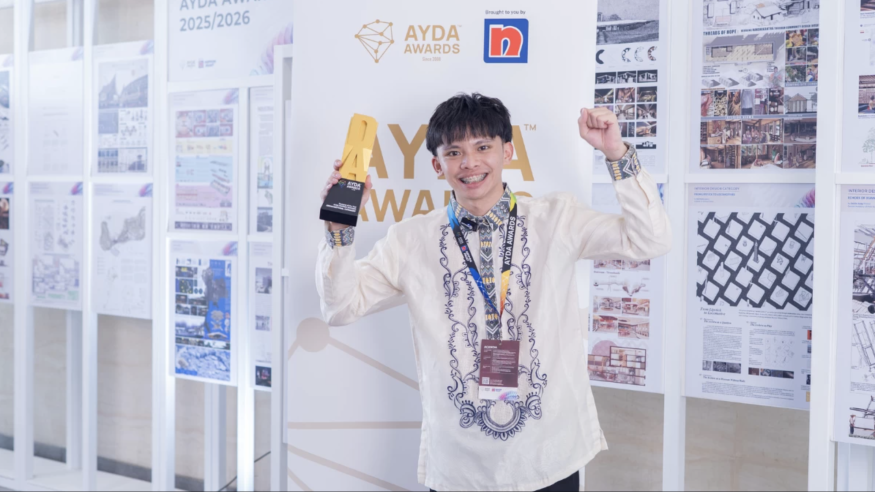
Filipino architecture student Ejhey L. Durias has been named Global Designer of the Year in the architectural category at the 2025-2026 AYDA International Awards for his Bajau-inspired design, "Banuas Lawod." The 23-year-old University of Mindanao student became the first Filipino to receive the competition's top international award in the architectural category.
Held in Bangkok, Thailand, the AYDA International Awards brought together architecture and interior design students from 17 countries and regions. More than 9,000 submissions were received for the competition, which carried the theme "CONVERGE: Crafting Cultural Legacies." The awards were formerly known as the Asia Young Designer Awards, which was established in 2008.
Durias's winning project centers on the Sama-Bajau community in Davao and proposes an aquaculture community hub designed to support traditional livelihoods while addressing displacement and cultural identity.
Who Is the Filipino Architecture Student Behind the Award-Winning Design?
Durias developed "Banuas Lawod" through research and conversations with members of the Sama-Bajau community in Davao, including people who had been displaced from coastal communities and lost their traditional livelihoods. According to Durias, those experiences changed his understanding of the challenges faced by the community and influenced him to approach the project with greater empathy.
The project was also influenced by Durias's childhood visits to coastal communities near Panabo City. Although he is not a member of the Sama-Bajau, he said those experiences contributed to his interest in their way of life. His research later gave him a deeper understanding of the difficulties faced by members of the community.
The name "Banuas Lawod" combines "banuwa," meaning community, and "lawod," referring to the deeper part of the sea. The project proposes a community for displaced Sama-Bajau members, incorporating housing, livelihood opportunities, aquaculture and spaces intended to preserve cultural identity.
Durias presented the story of Badol Kati Amilgani, a Sama-Bajau fisherman who travels across cities in the Davao region with his son and performs with improvised drums to earn a living after losing his traditional source of income. The story formed part of Durias's presentation to the international judges.
How 'Banuas Lawod' Brings Bajau Culture Into Contemporary Architecture
The Bajau-inspired design is built around five stated principles: preserving marine cultural identity, climate-adaptive architecture, aquaculture-based livelihoods, sustainable construction materials and a closed-loop environmental system.
The project draws from the traditional lepa houseboat and the Filipino bahay kubo for its housing design. It also incorporates flood-resilient construction, passive cooling, rainwater harvesting and gravity-fed water systems. These features are presented as part of a proposed coastal settlement designed around the community's relationship with the sea.
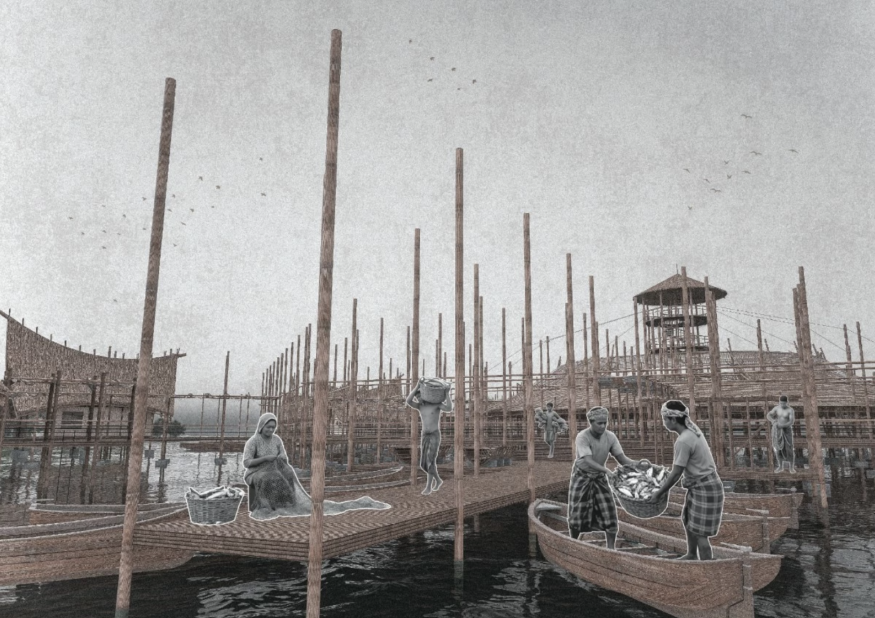
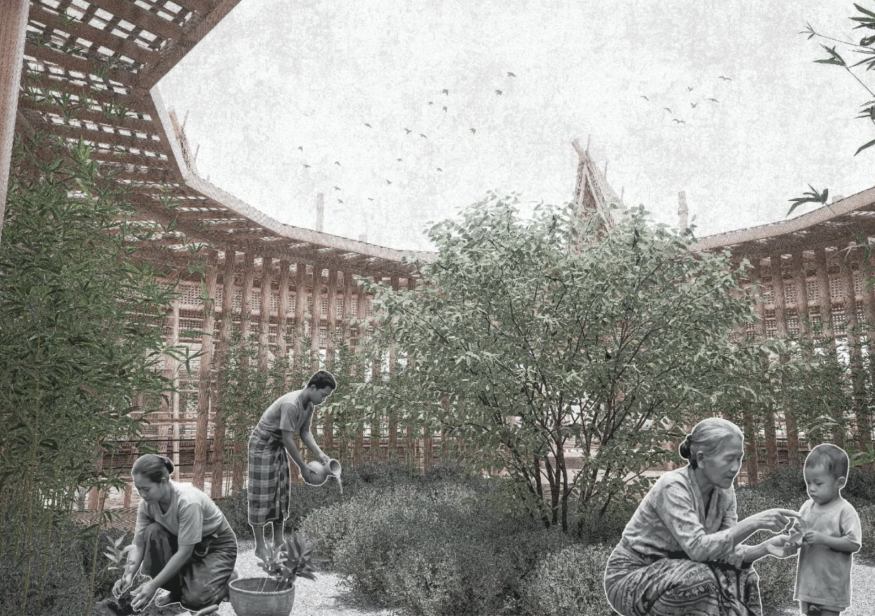
The broader development includes an aquaculture hub, seafood processing and trading facilities, shellfish and seaweed cultivation areas, community gardens and bamboo nurseries. The proposal also includes reef-inspired foundations intended to restore marine ecosystems while helping protect the settlement from storm surges.
Durias said the project aims to strengthen traditional livelihoods, encourage displaced Badjao families to reconnect with their communities and create opportunities for long-term economic and cultural resilience. The design therefore places housing alongside facilities connected to livelihood and environmental systems.
The Craftsmanship and Sustainable Details Behind the Bajau-Inspired Design
The architectural details of "Banuas Lawod" are tied to the conditions of a coastal settlement. Its design is inspired by the layered structure of scallop shells and integrates homes, shared community spaces, aquaculture facilities and ecological infrastructure into a single proposed settlement.
Its environmental features include flood-resilient construction, passive cooling, rainwater harvesting and gravity-fed water systems. The project also incorporates sustainable construction materials as one of its five core design principles.
The livelihood component is equally central to the proposal. Aquaculture facilities, seafood processing and trading areas, shellfish and seaweed cultivation, community gardens and bamboo nurseries are included alongside residential areas.
The proposal's reef-inspired foundations are intended to serve two purposes identified in the report: restoring marine ecosystems and helping protect the settlement from storm surges. Together, these elements form the practical framework of the project rather than functioning solely as visual references to the sea.
Durias also described "Banuas Lawod" as a regenerative coastal ecosystem rather than simply a housing intervention. He said he hopes the project can strengthen livelihoods, preserve culture and provide the community with a greater sense of security and belonging.
What the Global Designer of the Year Win Means for Philippine Architecture
Durias's achievement gives Filipino architecture a significant result at one of the region's major student architecture design awards. The AYDA International Awards evaluates entries based on design concept, innovation, functionality and relevance, sustainability, aesthetics and use of color.
His win was also part of a strong showing by Philippine students. Patria Danielle Malijan of De La Salle-College of Saint Benilde received the International Nippon Paint Colour Award in the interior design category for "Kampihan," a proposal that reimagines playgrounds as spaces for Filipino traditional games and cultural learning.
For Durias, the award also comes with a fully funded fellowship to the Design Discovery Program at Harvard University Graduate School of Design in Cambridge, Massachusetts, valued at up to $10,000. NIPSEA's account of the awards confirms that Durias and interior design winner Jackie Jiang Haoran are set to take part in the fully funded Harvard Design Discovery Program.
The recognition places "Banuas Lawod" among the latest examples of Philippine architecture gaining attention through an international design competition. Its proposal connects cultural identity, coastal living, aquaculture and environmental considerations within a single architectural concept, giving Durias's Filipino architecture project a distinctive place in the 2025-2026 AYDA International Awards.


Cushcore: The Cozy Decor Trend Making Homes Feel Softer This Fall

These 5 Common Household Items Could Be Making Your Home Feel Cluttered

Split-Level Home Designs Make a Comeback, and Modern Homeowners Take Notice

Designers Ditch Neutral Kitchens for Red With Surprisingly Chic Results

Gravel Gardens Explained: How to Design an Attractive Lower-Maintenance Landscape


