Benjamin Moore’s 2027 Color of the Year Is a Nature-Inspired Green With Timeless Appeal
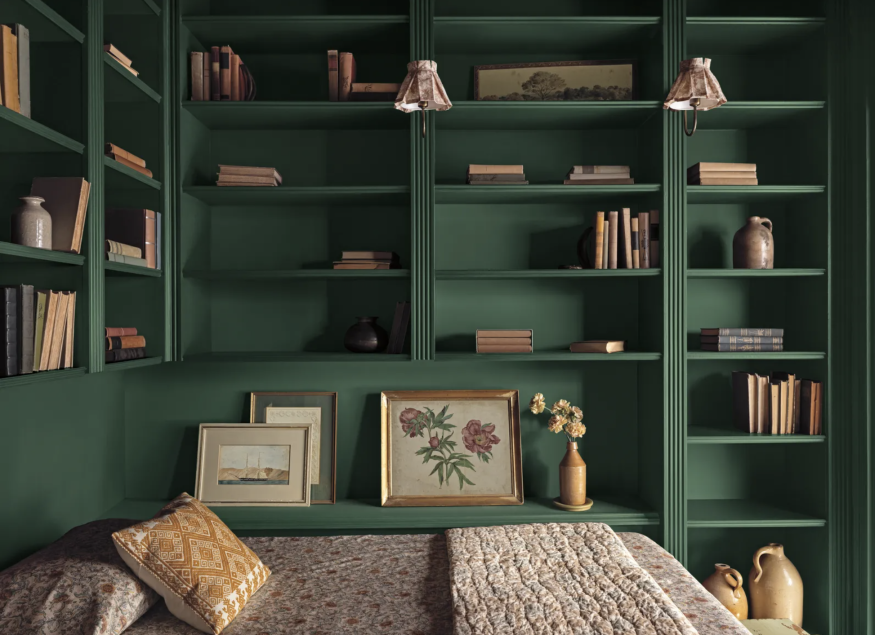
Benjamin Moore is encouraging homeowners to step away from fleeting design trends with its 2027 Color of the Year, Webster Green HC-130. The classic green hue offers a grounded alternative to the rapid cycle of social media-driven interiors, bringing a sense of permanence and connection to nature into contemporary spaces.
Announced on October 14, 2026, Webster Green comes from the brand's Historical Color Collection. Rather than introducing an entirely unfamiliar shade, the paint company has selected a color rooted in traditional design, reflecting the continuing appeal of familiar, enduring palettes. The choice also builds on a wider interest in greens that feel connected to the natural world without sacrificing sophistication. Benjamin Moore's official 2027 announcement outlines the thinking behind the selection.
Webster Green Offers a Welcome Break From Fast-Moving Trends
The phrase "touching grass" has become shorthand for disconnecting from online noise and reconnecting with the world beyond a screen. In interior design, that idea translates into spaces that feel personal, grounded, and less dependent on whatever happens to be trending.
Webster Green captures that sentiment through its balanced, mid-tone appearance. It has enough depth to establish a strong visual presence, but it does not have the intensity of a saturated emerald or the muted softness commonly associated with sage. The result is a green that can feel traditional in one setting and contemporary in another.
Benjamin Moore's color team identified green as a family with enduring appeal across different periods of design. Webster Green reflects that longevity while introducing an optimistic quality that prevents the shade from feeling overly nostalgic.
The selection also speaks to a growing design conversation about longevity. Homeowners are increasingly encouraged to choose finishes and colors that complement their architecture, furnishings, and daily routines rather than constantly replacing them to follow new trends.
Paint remains one of the most accessible ways to transform a room, but choosing a color with staying power can make future decorating decisions easier. A historically inspired green provides a foundation that can accommodate changing artwork, textiles, furniture, and accessories.
A Historical Shade With Contemporary Potential
Webster Green belongs to Benjamin Moore's Historical Color Collection, which draws from traditional architectural and decorative references. Its heritage gives the shade a sense of familiarity, while its balanced appearance allows it to work in homes that are not traditionally styled.
In a period property, the color could complement original woodwork, detailed moldings, and antique furniture. In a more contemporary home, it could introduce contrast against clean-lined cabinetry, simple architectural forms, and natural materials.
Its versatility also depends on the surrounding finishes. Warm wood, brass hardware, creamy whites, and textured fabrics can emphasize its traditional character. Black accents, pale stone, and restrained furnishings can create a sharper, more modern effect.
Lighting is another important consideration. Natural daylight can make green paint appear brighter and more open, while warmer artificial lighting may bring out its earthy qualities. Testing a sample on several walls and observing it at different times of day can help homeowners determine whether the color suits the room.
The Color Trends 2027 Palette Extends the Possibilities
Webster Green anchors Benjamin Moore's eight-color Color Trends 2027 palette, which combines the central green with seven complementary shades. The collection offers a starting point for creating coordinated interiors without requiring every room to share the same color.
The accompanying colors include:
- White Down OC-131, a soft off-white suited to walls, trim, and ceilings.
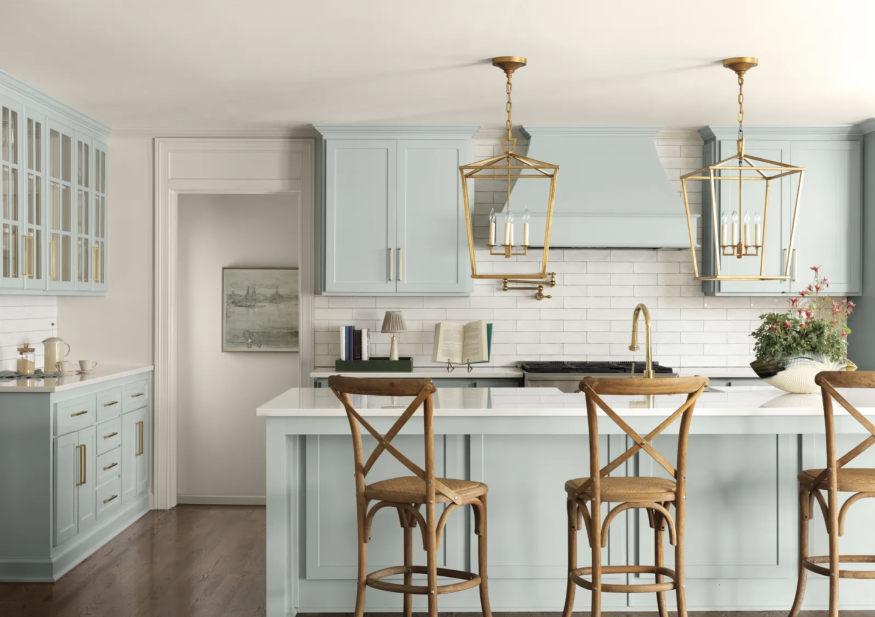
- Nelson Blue CW-635, a pale blue with a relaxed, watery character.
- Shakespeare Tan 228, a golden neutral that adds warmth.
- Antique Copper 1169, a rich brown with spiced undertones.
- Wild Aster 1240, a pink shade softened by gray.
- Durango 2137-30, a deep neutral with olive influences.
- Townsend Harbor Brown HC-64, a burgundy-toned brown with a classic feel.
Together, the colors support several approaches to decorating. Webster Green paired with White Down can create a restrained, traditional scheme, while Nelson Blue offers a cooler contrast. Antique Copper and Townsend Harbor Brown can deepen the palette for rooms that benefit from a more enveloping atmosphere.
The collection also allows green to function as an accent rather than the dominant color. Homeowners who are hesitant to paint an entire room can introduce it through a front door, a study, a powder room, or built-in cabinetry.
Where Webster Green Can Make the Biggest Impact
The shade is especially suited to spaces where color can contribute to the room's overall character. In a home office or library, it can provide a rich backdrop for bookshelves and wood furniture. In a powder room, it can create a more distinctive setting without requiring a large amount of paint.
Kitchen cabinetry offers another opportunity. Green cabinets can work alongside natural wood, light countertops, and understated metal finishes, producing a look that feels established rather than tied to a single trend cycle.
Exterior applications are also worth considering. Benjamin Moore identifies the shade as a potential complement to red brick, where the contrast can highlight the material's warmth and traditional character.
For homeowners planning a larger project, the most effective approach is to consider the color alongside existing finishes. Flooring, countertops, roof materials, and fixed cabinetry can influence how green appears and whether the final scheme feels cohesive.
Why Timeless Color Is Becoming a Strong Design Strategy
A Color of the Year announcement inevitably generates interest in what is new, but Webster Green's appeal rests partly on what is familiar. Instead of relying on novelty alone, the shade draws attention to the value of a carefully chosen palette that can evolve with a home.
That does not mean every interior needs to be traditional or that bold, short-lived trends have no place in decorating. Rather, a dependable base color gives homeowners greater freedom to experiment with smaller elements that are easier to replace.
The approach can also help reduce unnecessary redecorating. When walls, cabinetry, and other major finishes work with a variety of styles, homeowners can update a room through lighting, artwork, cushions, and accessories without starting from scratch.
Webster Green offers a practical interpretation of that philosophy. Its connection to historical color references provides a sense of continuity, while its flexibility leaves room for personal expression.
As homeowners reconsider the pace of interior trends, Benjamin Moore's 2027 selection presents green as more than a seasonal statement. It is an invitation to build spaces around color, materials, and details that remain meaningful long after a social media trend has passed.


These 5 Common Household Items Could Be Making Your Home Feel Cluttered

Dry Creek Bed Landscaping Ideas That Make Backyard Drainage Look Beautiful

Kitchen Backsplash Design: 7 Things to Consider Before You Choose

5 Expert-Backed Ways to Create a Calmer, Cozier Home This Winter

How Smart Architectural Design Helps Buildings Handle Heavy Rain


