Basement Storage Ideas That Transform Cluttered Spaces Into Organized, Functional Rooms

A basement can easily become the place where everything without a designated home ends up. Holiday decorations, sports equipment, tools, old furniture, children's toys, and household supplies can quickly turn an otherwise useful room into a maze of boxes. The right basement storage ideas, however, can make even a compact basement feel organized and functional.
Good basement organization does not necessarily require a major renovation. Simple additions such as wall-mounted shelving, labeled containers, built-in cabinets, and storage furniture can make overlooked areas work harder. For homeowners working with limited space, thoughtful small basement ideas can also help preserve valuable floor space while keeping belongings accessible.
Read more: Modern Butler's Pantry or More Cabinets? The Best Kitchen Storage Ideas for Better Home Organization
15 Basement Storage Ideas for a More Organized Space
1. Install Floor-to-Ceiling Shelving
Tall shelving is one of the simplest ways to increase storage without taking up much floor space. Adjustable shelves can accommodate everything from small containers to bulky household items. The lower shelves are ideal for heavier belongings, while seasonal items that are rarely needed can go higher.
2. Make Use of the Space Under the Stairs
The area beneath basement stairs is often overlooked. Depending on the layout, it can accommodate drawers, cabinets, pull-out shelves, or open cubbies. Custom storage can make particularly awkward sections useful without interfering with the rest of the room.
3. Use Matching Storage Bins
A collection of mismatched boxes can make even an organized basement look cluttered. Stackable storage bins create a more cohesive system and protect belongings from dust. Clear containers make contents easier to identify, while labels help keep categories consistent.
4. Create Dedicated Storage Zones
Instead of treating the entire basement as one storage area, dividing it into zones can make organization considerably easier. One section might hold holiday decorations, another could store sports equipment, and another could be reserved for tools or cleaning supplies. Grouping similar belongings also makes it easier to find things later.
5. Take Advantage of Empty Walls
Walls provide valuable storage opportunities in basements where floor space is limited. Pegboards, hooks, rails, narrow shelves, and wall-mounted cabinets can hold tools, bicycles, gardening equipment, and other items. This approach is particularly useful for small basement ideas because it keeps frequently used belongings within reach without crowding the floor.
6. Add Overhead Storage
Ceiling-mounted racks can turn unused overhead space into a place for bulky or seasonal belongings. They work especially well for items that are only accessed occasionally. Careful installation is important, particularly around lighting, pipes, ductwork, and other basement utilities.
7. Build Storage Around Support Columns
Basement support columns can create awkward gaps, but they can also become part of the storage plan. Narrow shelves or custom cabinetry can be installed around suitable areas, creating useful compartments without blocking walkways.
8. Use Rolling Storage Carts
Slim rolling carts can fit into narrow spaces beside laundry machines, workbenches, or cabinets. Because they can be moved easily, they are useful for cleaning supplies, craft materials, tools, and other smaller belongings.
9. Add a Compact Mudroom Area
For basements that connect to an exterior entrance, a small mudroom can improve everyday basement organization. A bench with storage underneath, wall hooks, and shoe cubbies can give coats, footwear, backpacks, and outdoor gear a dedicated home.
10. Choose Modular Storage
Cube shelving and modular systems can adapt as storage needs change. Baskets can conceal smaller items, while open compartments can hold books, toys, or decorative objects. Their flexible design makes them practical for basements that serve multiple purposes.
11. Improve Existing Closets
A basement closet does not have to remain a basic hanging space. Adjustable shelving, hooks, drawer units, and over-the-door organizers can make use of vertical space and previously unused areas. Measuring the closet before adding organizers helps prevent wasted space.
12. Choose Furniture With Built-In Storage
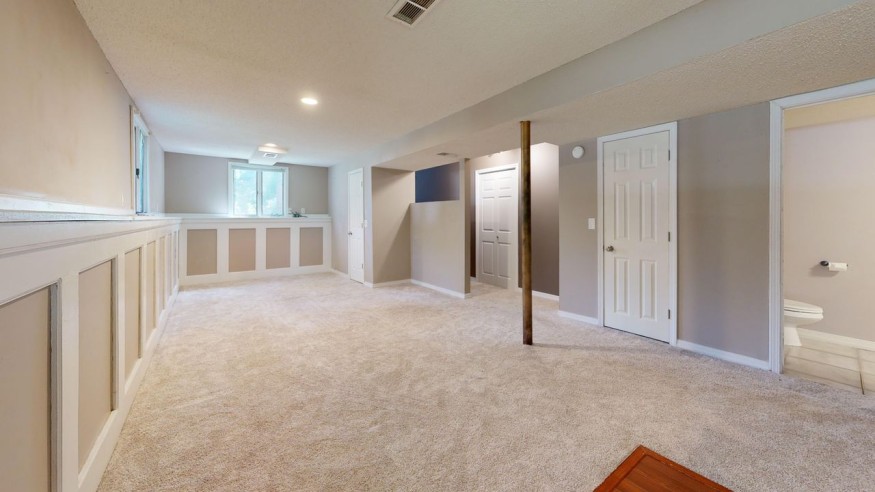
A basement family room or entertainment area can benefit from furniture that serves more than one purpose. Storage ottomans, benches, coffee tables, and media consoles can conceal blankets, games, toys, electronics, and other items while keeping the room comfortable.
13. Turn Awkward Corners Into Storage
Corners that are too small for standard furniture can still accommodate narrow shelving or custom cabinets. Even a slim vertical unit can provide a useful home for books, supplies, or decorative accessories while keeping the rest of the room open.
14. Store Seasonal Items Strategically
Frequently used belongings should remain within easy reach, while seasonal items can be placed in higher or less accessible storage. Holiday decorations, winter clothing, and occasional-use equipment can be grouped and labeled so they can be retrieved when needed without disturbing everyday storage.
15. Keep Belongings Off the Floor
Elevated shelving and storage systems can help protect belongings from potential moisture on the basement floor. This is particularly important for items that could be damaged by damp conditions. Important documents, irreplaceable photographs, and other moisture-sensitive belongings may be better stored elsewhere.
What Should Not Be Stored in a Basement?
Basements can experience moisture, temperature changes, pests, or flooding, depending on the property. Items that are particularly vulnerable to these conditions should be evaluated carefully before being stored there.
Paper records, valuable photographs, electronics, delicate fabrics, and irreplaceable personal belongings may require a more controlled environment. If such items must remain in the basement, they should be stored in appropriate protective containers and kept elevated from the floor.
Better Basement Storage Starts With Using Space Strategically
A well-organized basement does not depend on having endless room. Strategic shelving, overlooked corners, under-stair areas, wall-mounted systems, and multifunctional furniture can create significantly more usable storage. By combining these basement storage ideas with a consistent approach to basement organization, homeowners can keep belongings accessible while preserving valuable living space. For compact rooms, thoughtful small basement ideas can make the difference between a crowded storage zone and a basement that feels genuinely useful.
Frequently Asked Questions
1. What is the best way to organize a basement?
The best approach is to group belongings by category and frequency of use, then assign each category a dedicated storage zone. Vertical shelving, labeled bins, cabinets, and wall-mounted organizers can help keep everything accessible.
2. How can a small basement have more storage?
A small basement can gain storage by using vertical walls, under-stair areas, corners, closets, ceiling space, and furniture with built-in compartments. Keeping storage off the floor can also preserve valuable walking space.
3. What storage is best for basement moisture?
Elevated shelving and sealed, durable storage containers can help protect belongings from occasional moisture. Items that are highly sensitive to humidity or water should be kept in a more suitable part of the home.
4. How can basement storage look attractive?
Closed cabinets, coordinated bins, baskets, built-in shelving, and furniture with concealed compartments can keep belongings organized without making the basement look cluttered. Choosing storage that complements the room's design can make it feel intentional.


Cold Minimalism Is Losing Ground. This Is What Designers Want Instead

The New Desert Architecture Is Designed to Work With the Landscape

Is 2016 Interior Design Making a Comeback? What the Nostalgia Trend Reveals

The Invisible Design Details That Make a Home Feel More Comfortable

6 Backsplash Trends for 2027 That Designers Say Will Stand the Test of Time


