Meet Pattern Sandwiching: The Maximalist Interior Design Trend Giving Rooms More Personality
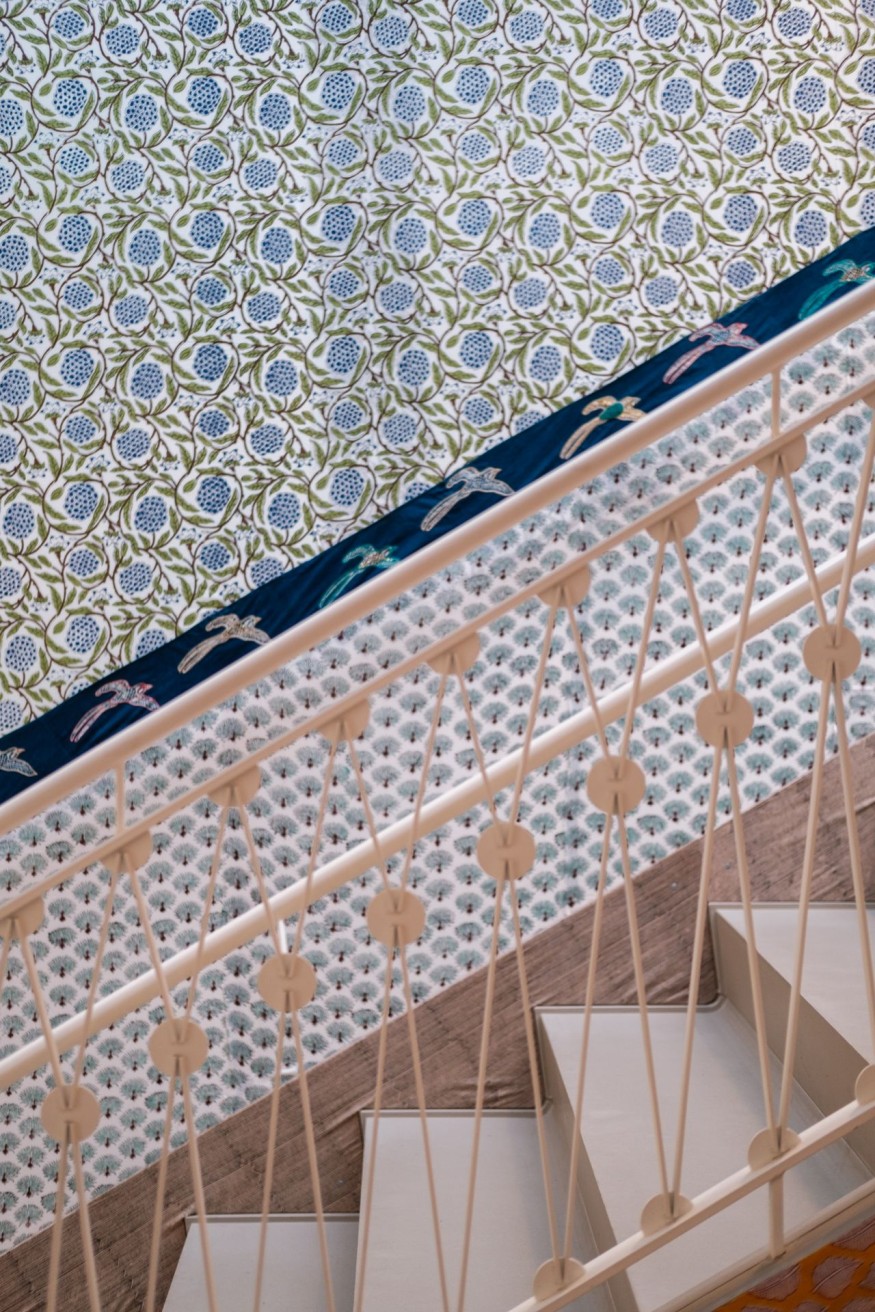
Interior design is becoming more expressive, and one of the most talked-about ideas for 2026 is pattern sandwiching. The playful name describes a decorating technique that gives bold wallpaper or another patterned surface a more deliberate frame through coordinating paint, trim, ceilings, or architectural details.
Rather than filling every available surface with competing prints, pattern sandwiching interiors create a visual relationship between pattern and solid color. The result can feel collected and decorative without sacrificing balance.
The idea also fits naturally into the broader movement toward layered patterns, richer color palettes, and more personality-driven rooms. For homeowners interested in interior design trends 2026, it offers a way to experiment with pattern without committing to an entirely maximalist space.
What Is Pattern Sandwiching in Interior Design?
Pattern sandwiching is an approach in which a patterned surface is visually enclosed by coordinating solid-colored elements. Wallpaper is often the central feature, while painted walls, wainscoting, trim, ceilings, doors, or other architectural details create the surrounding layers.
The concept is similar to a sandwich. A patterned material acts as the filling, while painted or relatively quiet surfaces provide the layers around it.
The technique works because the surrounding color can pick up a shade already present in the pattern. A floral wallpaper, for example, might be paired with painted trim in one of its softer botanical colors. This repetition helps the different surfaces feel connected rather than randomly assembled.
Pattern sandwiching is also more specific than traditional pattern mixing. Pattern mixing generally involves combining different prints across furnishings, textiles, wallpaper, rugs, and accessories. Pattern sandwiching instead focuses on how a pattern interacts with the architectural surfaces surrounding it.
Why Is Pattern Sandwiching Trending in 2026?
The growing interest in pattern sandwiching reflects a larger shift toward interiors that feel personal, decorative, and less dependent on uniformly neutral rooms. Current home decor trends 2026 increasingly embrace distinctive wallpaper, saturated colors, vintage-inspired details, and rooms with stronger visual character.
Pattern sandwiching provides an accessible entry point into that aesthetic. A homeowner does not necessarily need several elaborate prints to achieve a decorative effect. One expressive wallpaper can become the focal point, while paint and architectural details reinforce its palette.
The approach also complements maximalist interior design, where color, print, texture, and decorative objects are layered to create a richly detailed environment. At the same time, it can be adapted for more restrained interiors by using a quieter wallpaper and a closely related paint color.
That flexibility may be part of its appeal. Pattern sandwiching can look dramatic in a dining room or playful in a powder room, yet the basic principle remains straightforward.
How Does Pattern Sandwiching Work?
The easiest way to understand the technique is to think about the relationship between the patterned center and the surrounding surfaces. Wallpaper can provide the main visual interest, while painted trim or paneling grounds it.
A ceiling can become another part of the composition, particularly when its color is drawn from the wallpaper. Wainscoting can serve a similar purpose below patterned walls, creating a transition between the print and the floor.
Color selection is particularly important. Instead of choosing a completely unrelated paint shade, designers can identify an existing color within the pattern. It does not have to be the most prominent color. A muted green from a leaf motif, a warm brown from a botanical stem, or a dusty blue from a small decorative detail can become the connecting element.
This creates cohesion while allowing the pattern to remain visually interesting.
Pattern Mixing Ideas That Keep Layered Patterns Balanced
Pattern sandwiching does not mean every surface needs to match. In fact, thoughtful variation can make the room more sophisticated. These pattern mixing ideas can help create visual balance:
- Start with one dominant pattern and allow it to establish the room's personality.
- Repeat one or two colors from that pattern elsewhere in the space.
- Combine different pattern scales when adding textiles or accessories.
- Use solid surfaces between stronger prints to give the eye a place to rest.
- Consider texture as another layer instead of introducing another competing motif.
The same principles apply when incorporating layered patterns through curtains, upholstery, cushions, rugs, and artwork. A room can contain several decorative elements without appearing disjointed when they share related colors or proportions.
How Can Pattern Sandwiching Work With Different Design Styles?
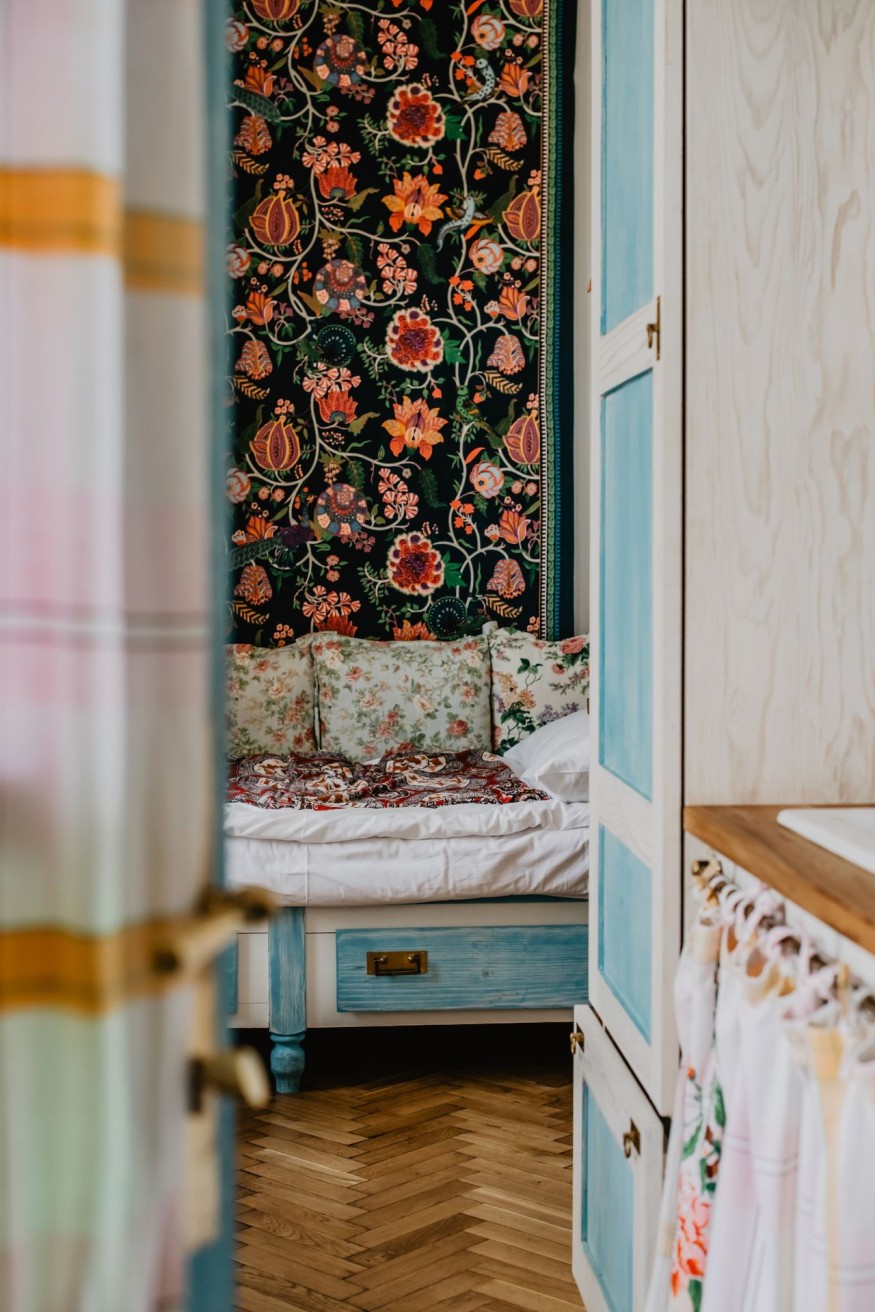
Although the trend has a contemporary social-media-friendly name, the underlying design principle is not limited to one aesthetic. Traditional interiors can use floral wallpaper with painted paneling, while cottage-inspired rooms can pair small-scale botanical prints with warm painted woodwork.
Modern spaces can take a more restrained approach with geometric wallpaper and a closely related ceiling or trim color. Eclectic rooms can push the idea further by introducing contrasting furnishings and accessories.
The key is coordination rather than strict uniformity. A successful room does not necessarily repeat the same pattern throughout. Instead, its colors, scales, textures, and architectural elements work together.
Will Pattern Sandwiching Stay Among Home Decor Trends 2026?
Whether the phrase itself remains popular is difficult to predict, but the decorating principle behind pattern sandwichingis less dependent on a particular trend cycle. Using paint to connect wallpaper with architectural details has long been a way to create visual continuity.
What feels particularly current is the renewed willingness to make ceilings, trim, doors, and paneling active parts of a room's design. That approach aligns with the broader movement toward expressive home decor trends 2026, where color and pattern are used to make spaces feel more individual.
For homeowners considering the trend, the most enduring approach is likely to focus less on following the name and more on understanding the relationship between pattern, color, and architecture.
Pattern Sandwiching Can Make Pattern Feel More Intentional
Pattern sandwiching interiors offer a practical way to introduce stronger prints while maintaining a sense of order. By surrounding a patterned feature with thoughtfully chosen colors and architectural details, the technique turns individual surfaces into a more cohesive composition.
For those exploring pattern mixing, the approach also demonstrates that a room does not need countless prints to feel layered. Sometimes one well-chosen pattern, supported by the right paint and details, can provide enough character to transform an entire space.
Frequently Asked Questions
1. What is pattern sandwiching in interior design?
Pattern sandwiching is a decorating technique that places a patterned element, often wallpaper, between or alongside coordinating solid-colored surfaces such as trim, paneling, walls, or ceilings.
2. Is pattern sandwiching the same as pattern mixing?
No. Pattern mixing involves combining multiple prints and motifs, while pattern sandwiching focuses on framing or surrounding a dominant pattern with complementary colors and architectural elements.
3. Does pattern sandwiching work in small rooms?
Yes. Small spaces such as powder rooms, hallways, and bedrooms can be particularly suitable because a strong pattern can create a distinct focal point without overwhelming a large open-plan area.
4. Can pattern sandwiching work without maximalist decor?
Yes. The technique can be adapted to traditional, modern, cottage, transitional, or eclectic interiors. Using one dominant pattern and restrained surrounding colors can create a more understated interpretation.


Cushcore: The Cozy Decor Trend Making Homes Feel Softer This Fall

These 5 Common Household Items Could Be Making Your Home Feel Cluttered

Split-Level Home Designs Make a Comeback, and Modern Homeowners Take Notice

Designers Ditch Neutral Kitchens for Red With Surprisingly Chic Results

Gravel Gardens Explained: How to Design an Attractive Lower-Maintenance Landscape


