Inside Madrid’s Brand-New F1 Circuit: The Designer Explains the Dramatic Ideas Behind the Madring
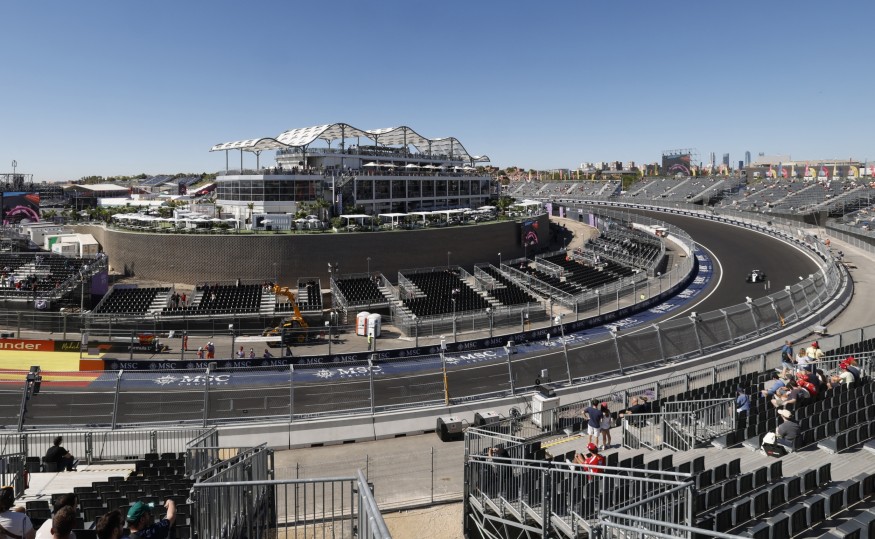
Formula 1 has a new setting in Madrid, but the Madring is not simply another temporary street circuit carved through city roads. It is a hybrid piece of infrastructure designed to combine existing public streets, purpose-built sections, dramatic elevation changes, and an unusually close relationship between the track and its spectators.
As the circuit makes its Formula 1 debut during the 2026 Spanish Grand Prix this weekend, its designer, Italian racetrack specialist Jarno Zaffelli, is explaining how the ambitious project came together.
Zaffelli is the founder of Dromo and has designed more than 200 courses across a 25-year career. Madring, however, represents one of his most ambitious projects.
A Track Built Around Madrid
The circuit was approximately three years in development and had to work around an unusually complicated urban environment. The 5.4-kilometer track integrates 1.5 kilometers of public roads in Madrid's Valdebebas neighborhood while also flowing through the grounds of IFEMA, the city's major convention center. The location sits close to Madrid-Barajas Airport and the Real Madrid Sport City complex.
That meant the design could not simply be approached as a conventional purpose-built racing circuit. Zaffelli's team had to consider transportation, environmental agencies, airport authorities, local infrastructure, and the practical demands of a temporary racing venue.
In an interview with Architectural Digest, Zaffelli explained that using public roads requires coordination with dozens of different entities. His team ultimately reduced the amount of public road incorporated into the circuit by more than half from the initial sketches, partly to reduce disruption to the surrounding community.
Twenty-Two Turns With a Dramatic Centerpiece
Madring features 22 turns, but one has already become the defining visual signature of the circuit. Known as La Monumental, Turn 12 is a heavily banked corner with a 24 percent slope gradient and a maximum elevation change of 10 meters. According to Zaffelli, the corner itself was only part of the challenge. The preceding turns introduce additional elevation changes, creating a sequence intended to make drivers feel as though they are traveling even faster.
Cars are expected to exceed 300 kilometers per hour during a lap. The design is deliberately different from the flat, stop-start character sometimes associated with temporary street circuits. Zaffelli wanted Madring to have a sense of flow while also creating technical challenges for the drivers.
Designing for the Spectator
The circuit was also designed from the beginning with the audience in mind. Rather than treating grandstands as something added after the track layout was finalized, Zaffelli prioritized their proximity to the racing surface. Two major grandstands sit on either side of La Monumental, giving the banked section an almost stadium-like atmosphere.
It is an architectural decision as much as a sporting one. The goal is to make spectators feel physically close to the cars while giving drivers a strong sense of the crowd around them. That relationship between track and audience is particularly important for a temporary urban circuit, where the event needs to feel embedded in the city rather than isolated from it.
Building the Circuit
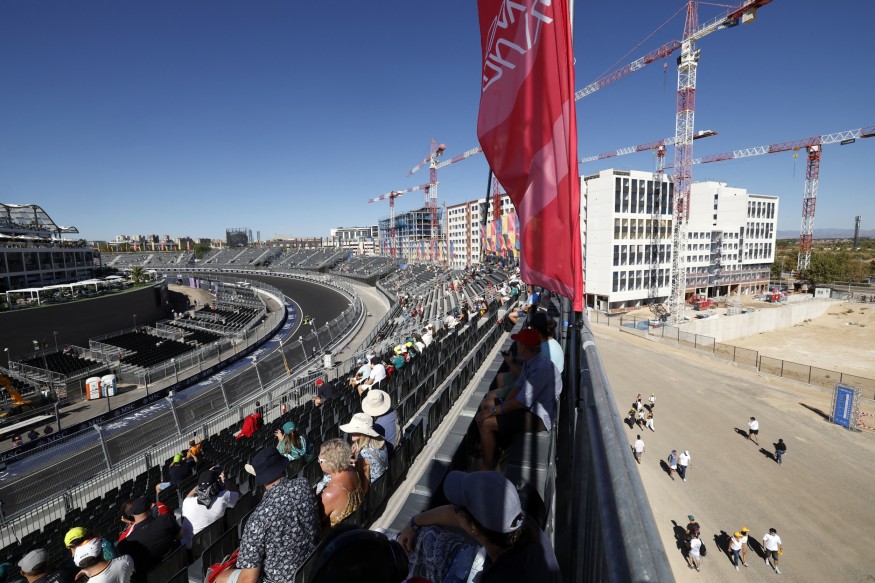
The physical construction was another enormous undertaking. Work began in April 2025 and took approximately 17 months. Around one million square meters of earth were moved during construction.
The result is a circuit that occupies a curious middle ground between permanent racetrack and street course. Parts of the route use public infrastructure, while other sections were constructed specifically for Formula 1.
That hybrid approach is increasingly interesting as major cities look for ways to host large sporting events without necessarily building entirely new permanent venues.
The Design Is Already Being Tested
The real test, of course, is whether Madring produces good racing. Before Formula 1 arrived, Formula 3 drivers tested the circuit in August. The test generated 19 red flags, raising questions about how unforgiving some of the corners might be.
Longtime track designer Robert Barnard has also expressed concern about blind corners, arguing that limited sight lines could discourage drivers from making aggressive moves.
The concerns are not necessarily evidence of a flawed design. New circuits often expose drivers to unfamiliar braking points, kerbs, elevation changes, and sight lines. But Madring's debut will provide the first meaningful indication of whether its ambition translates into compelling Formula 1 racing.
The opening practice sessions have already shown that the track is demanding. During Friday's running, Racing Bulls rookie Arvid Lindblad became the first F1 driver to crash at the new circuit, while Mercedes driver Kimi Antonelli topped the second practice session.
A Different Model for Street Circuits
What makes Madring especially interesting from a design perspective is the attempt to move beyond the traditional definition of a street circuit.
Instead of simply closing existing roads and inserting barriers, the project combines urban infrastructure with purpose-built racing geometry. Elevation, banking, spectator proximity, and the relationship between the circuit and IFEMA all contribute to its identity.
Whether it ultimately produces overtaking-heavy races remains to be seen. But the circuit already demonstrates how motorsport venues can become significant pieces of urban design.
For Zaffelli, the ambition is straightforward: create a street circuit that does not feel boring. Madring now has its chance to prove whether that idea works at Formula 1 speed.


How to Make Your Home Bathroom Feel More Like a Spa for Less

7 Art Deco Trends Designers Are Bringing Back for Modern Homes

The Built-In Tub Is Back, and It's More Stylish Than You Remember

The Micro Kitchen Is the Smart New Alternative to the Oversized Kitchen

Is Your Wall Paint Looking Dull? Here's Why It Happens and How to Bring Your Walls Back to Life


