Shanghai Grand Opera House by Snøhetta Debuts Along the Huangpu River
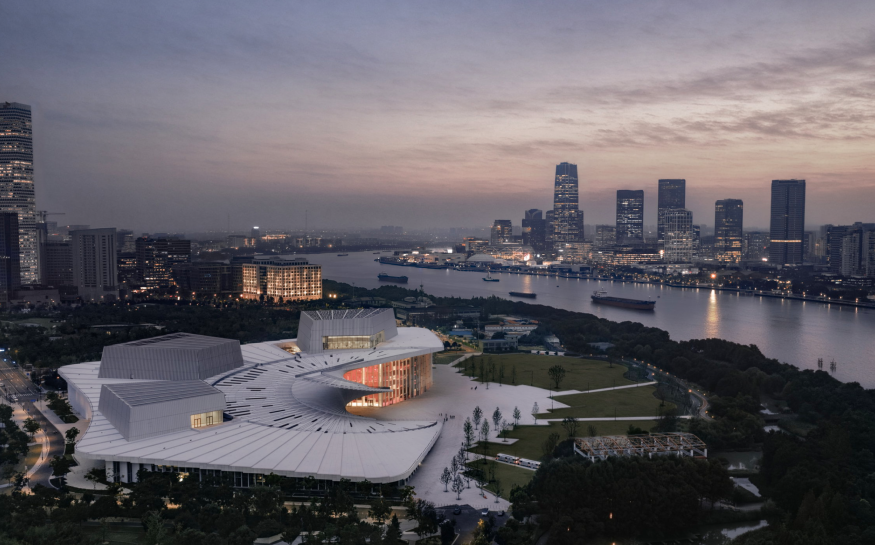
Shanghai has welcomed a major new cultural landmark with the opening of the Shanghai Grand Opera House, designed by international architecture studio Snøhetta. Located along the Huangpu River, the completed building brings together performance spaces, public amenities and an expansive rooftop promenade in a design that positions architecture as an extension of the city's cultural life.
The opera house officially opened on October 17, 2026, marking the culmination of a project developed over several years. Rather than functioning solely as a destination for ticketed performances, the building is designed to welcome visitors into its surrounding public spaces, offering opportunities to experience the architecture even without attending a show.
Its sweeping roofline and interconnected public levels establish a distinctive silhouette along the waterfront, while the interior accommodates a range of performance formats, from traditional opera to experimental productions.
A Sweeping Roof Defines the Shanghai Grand Opera House
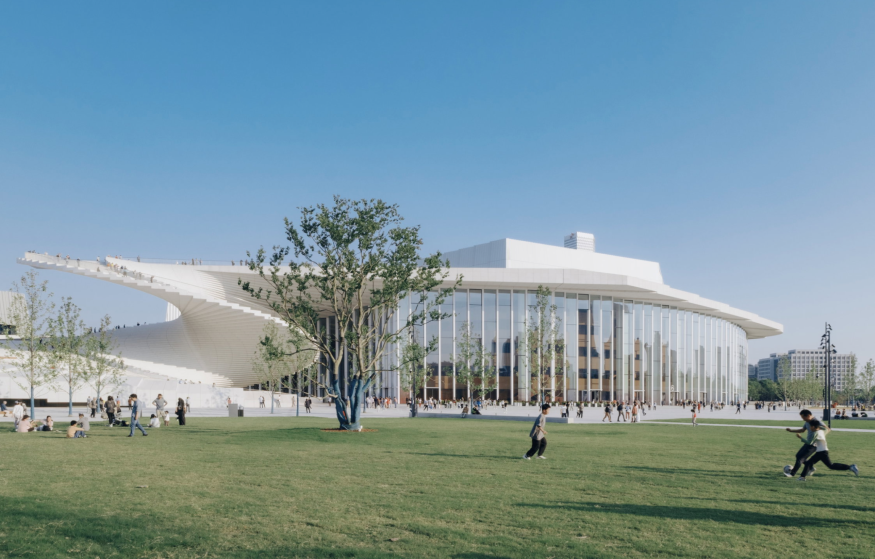
The building's defining architectural feature is its expansive, curved roof, which appears to flow across the site. Inspired by movement and the changing relationship between the city and the Huangpu River, the design creates a continuous architectural gesture that unifies the opera house's different functions.
The roof also serves as more than a visual statement. Its accessible upper levels form a public promenade, allowing visitors to move above the building and take in views of the river and surrounding skyline. A spiraling staircase connects the ground level to the rooftop, making circulation an integral part of the visitor experience.
According to Snøhetta's official project announcement, the design is guided by three central ideas: movement, belonging and experience. These principles influence how people approach the building, navigate its spaces and interact with the wider cultural destination.
The architecture also establishes connections between the surrounding landscape and the building's interior. Flowing public levels, landscape routes and open circulation areas help create a more permeable relationship between the opera house and its waterfront setting.
Three Auditoriums Accommodate Different Performance Formats
The Shanghai Grand Opera House covers approximately 146,786 square meters and contains three auditoriums with a combined seating capacity of 4,200. Each venue has a distinct role, allowing the complex to support a broad program of musical and theatrical performances.
Harmony Hall, the principal auditorium, accommodates 2,000 people across five levels. Its arrangement is designed to bring audiences closer to the stage while supporting the acoustic requirements of operatic performance.
The 1,200-seat Soar Theatre provides a more intimate environment suited to classical and baroque opera, operetta and theatrical productions. Meanwhile, the 1,000-seat Open Stage offers greater flexibility for experimental performances and productions that benefit from adaptable stage and seating arrangements.
Together, the three venues allow the opera house to accommodate established art forms and newer performance approaches under one roof.
The project also incorporates rehearsal and production facilities, education spaces, exhibition areas and hospitality amenities. These additional functions support the daily operations of a major performing arts institution while expanding the building's potential uses beyond scheduled performances.
Architecture and Engineering Work Together
The opera house's sweeping geometry required extensive coordination between architects, engineers and specialist consultants. Snøhetta worked with the East China Architectural Design & Research Institute, structural engineering firm schlaich bergermann partner, theatre planning specialists Theatre Projects and acoustics consultant Nagata Acoustics.
The structural system supports the broad roof and its public circulation routes while accounting for the movement of visitors across the elevated spaces. This engineering work helps translate the fluid architectural concept into a building that can accommodate both complex performance requirements and everyday public use.
Inside, the design shifts in character. The main auditorium features a darker red palette, creating a more concentrated atmosphere around the stage. Material selection and interior geometry also respond to the acoustic needs of opera, where the relationship between performers, sound and audience is fundamental to the experience.
The other auditoriums introduce different spatial atmospheres suited to their individual programs, creating variation within the larger complex.
A Public Cultural Destination Along the Huangpu River
The Shanghai Grand Opera House reflects a broader approach to cultural architecture in which major institutions are designed to contribute to urban life beyond their primary functions.
Restaurants, exhibition spaces, educational facilities and publicly accessible areas encourage visitors to use the complex throughout the day. The rooftop promenade is particularly significant because it allows the building to operate as a destination in its own right, rather than remaining accessible only to audiences attending performances.
The project also contributes to Shanghai's wider cultural development along the Huangpu River. Its combination of performance infrastructure, landscape connections and public circulation creates a landmark that links the performing arts with the city's waterfront environment.
With its opening, the Shanghai Grand Opera House establishes a new architectural presence while offering a venue for a diverse range of artistic activities. Its long-term significance will depend not only on the productions staged inside but also on how effectively its public spaces become part of everyday life in the city.


From Craft Rooms to Music Studios: Why Dedicated Hobby Spaces Are Trending

The Best Flooring Transitions for a Seamless Look Between Different Materials

Malibu's Celebrity Real Estate Market Faces New Challenges From Coastal Erosion

Bold Patterns, Warm Colors, and Festive Entrances Are Shaping This Season's Home Trends

Dr. Phil Lists Beverly Hills Mansion for $67.5 Million, More Than Double Its Purchase Price


