10 Feng Shui Office Ideas That Can Help Your Workspace Feel More Productive
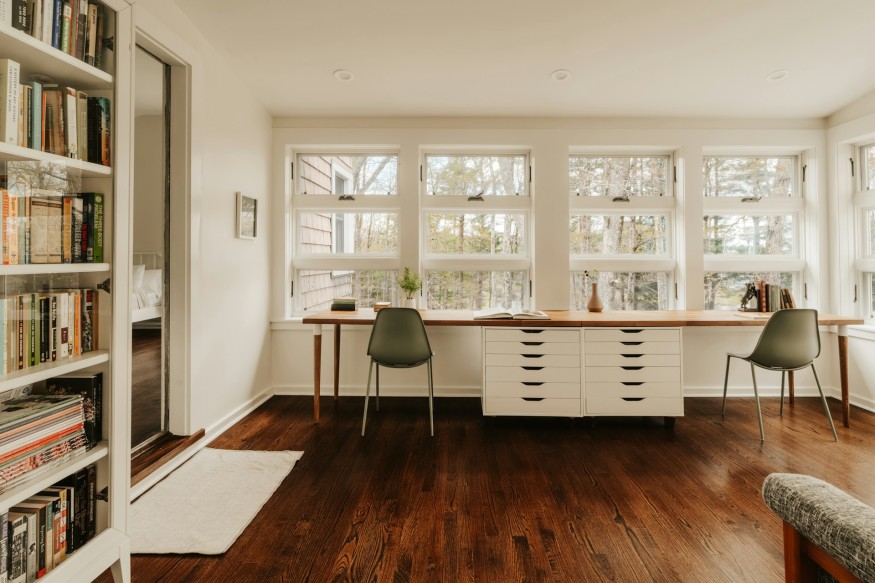
A productive office is not only about having the right desk or an expensive ergonomic chair. The arrangement of the room can influence how comfortable, organized, and focused the space feels.
Feng shui offers one approach to office planning. The traditional Chinese practice considers how placement, movement, balance, and the surrounding environment affect the experience of a space.
For a modern home office, many of its principles can also translate into straightforward design decisions: placing the desk where the doorway is visible, keeping clutter under control, introducing natural elements, and creating a visually calm environment. Feng shui should not be treated as a guarantee of career success or productivity, but it can provide a useful framework for arranging a workspace intentionally.
1. Put the Desk in the Command Position
The most recognizable feng shui office principle is the command position.
Ideally, the person sitting at the desk should be able to see the door without sitting directly in line with it. A solid wall behind the chair is also preferred because it creates a sense of support.
This does not mean every office needs a perfect floor plan. Even rotating a desk slightly can sometimes improve the sightline to the entrance.
Read more: Open the Door to Good Chi: Feng Shui Entryway Ideas That Fill Your Home With Positive Energy
2. Keep the Area Behind the Chair Solid
A solid wall, substantial bookcase, or another stable visual element can provide the sense of support associated with the command position.
If the only available location puts the chair in front of a window, a room divider or tall bookcase may provide an alternative visual anchor.
The objective is not to sacrifice natural light simply to follow one rule. The best arrangement should balance feng shui principles with the practical needs of the room.
3. Bring in Natural Light
Natural light can make an office feel brighter and more pleasant.
Whenever possible, positioning a desk near a window can provide daylight, although the window is generally better positioned to the side of the workstation rather than directly behind a monitor.
A layered lighting plan is useful after sunset. A task lamp can provide focused illumination without requiring the entire room to be brightly lit.
4. Remove Unnecessary Clutter
Clutter is one of the easiest things to address in a feng shui office.
The goal is not necessarily to create a completely minimalist room. Instead, frequently used items should have designated homes, while objects that no longer serve the workspace should be removed.
Closed storage can be particularly helpful for reducing visual noise while keeping supplies accessible.
5. Add a Healthy Plant
Plants are a natural way to introduce the wood element associated with growth and vitality in feng shui.
One healthy plant is enough. A large collection is not necessary, especially in a compact office.
The plant should also be appropriate for the amount of available light and the homeowner's ability to care for it. A struggling plant is unlikely to improve the visual quality of the room.
6. Use Natural Materials
Wood, stone, ceramics, woven fibers, and other tactile materials can make an office feel less sterile.
A wooden desk, woven basket, ceramic planter, or natural-fiber rug can introduce texture without requiring a major redesign.
Feng shui's Five Phases can also provide inspiration for balancing materials, although there is no need to represent every element equally.
7. Keep the Desk Surface Intentional
A desk does not have to be completely empty to feel organized.
The practical goal is to keep only the objects that support current work within immediate reach. A computer, notebook, lamp, and a few frequently used supplies may be enough.
Everything else can move into drawers, cabinets, shelves, or nearby storage.
8. Create a Clear Path Into the Office
Furniture should not make the entrance feel cramped.
A clear path from the doorway to the main work area can make a small office feel more spacious and easier to navigate. In feng shui terms, unobstructed movement supports the flow of qi. In practical design terms, it simply makes the room easier to use.
This is especially important in small home offices where every piece of furniture has to earn its footprint.
9. Choose Colors That Support the Mood
There is no single universally correct feng shui office color.
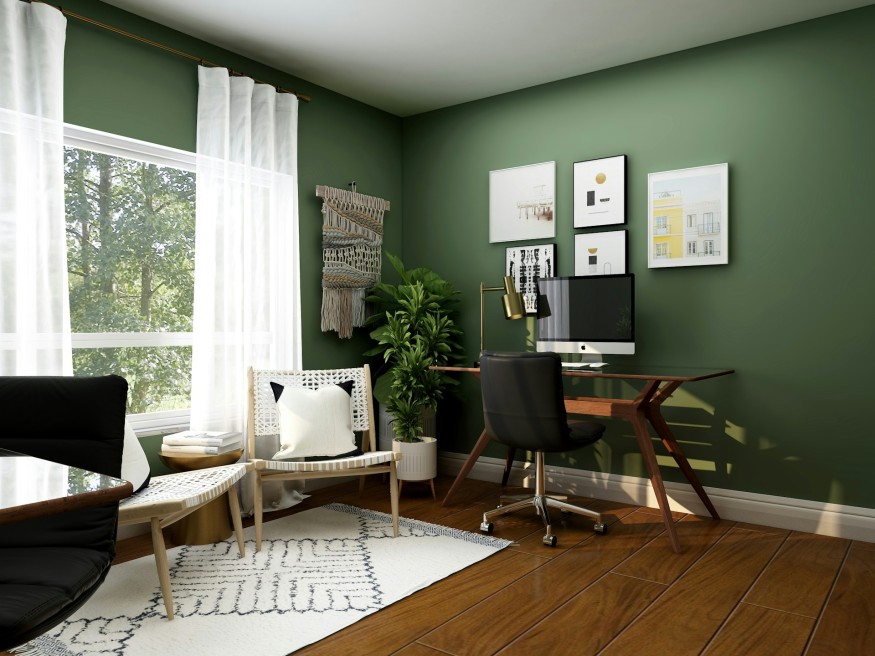
Instead, homeowners can use color to create the atmosphere they want. Soft greens and natural wood tones can reinforce a connection with nature, while warm neutrals can make an office feel grounded.
Blue can introduce a quieter quality, while carefully controlled warm tones can add energy.
The most important consideration is whether the overall palette helps the room feel calm enough for sustained work without becoming visually dull.
10. Separate Work From Rest
A strong office setup should make it easier to transition into and out of work.
This becomes particularly important when the office occupies a bedroom, living room, or another multifunctional space.
At the end of the day, closing the laptop, clearing the central desk area, switching off task lighting, and putting work materials away can create a physical boundary between work and personal time.
That practical ritual fits neatly with feng shui's emphasis on intentional spaces and clear movement.
A Better Office Starts With the Layout
Feng shui does not require homeowners to fill an office with crystals, lucky objects, or elaborate decorative rules.
The most useful principles are often the simplest ones: position the desk thoughtfully, create visual support behind the chair, maintain a clear entrance, control clutter, bring in natural light, and introduce elements that make the space feel comfortable.
For anyone redesigning a home office, those changes can create a more considered environment without requiring a major renovation.
Frequently Asked Questions
1. What is the best feng shui position for an office desk?
The traditional command position places the desk where the person can see the door without sitting directly in line with it, ideally with a solid wall behind the chair.
2. Should a home office have plants?
Plants are commonly used in feng shui offices to represent the wood element and bring a natural presence into the workspace. Choose plants based on the room's available light and maintenance requirements.
3. What colors are best for a feng shui office?
There is no single required color. Natural greens, warm neutrals, wood tones, and restrained blues can all work depending on the mood and function of the room.
4. Does feng shui actually increase productivity?
Feng shui itself should not be presented as a scientifically proven productivity system. However, several practical recommendations, such as reducing clutter, improving lighting, and arranging a desk for a comfortable view of the room, can contribute to a more usable workspace.


8 Stylish Halloween Staircase Decor Ideas That Make a Dramatic Statement

The Best Prime Day Furniture Deals to Look for Before Refreshing Your Home

Small-Space Design: Why the 'Boneless' Sofa Is Worth Considering

How to Bring Autumn Into Every Room With These 12 Cozy Decorating Ideas

The Essential Fall Home Maintenance Checklist Every Homeowner Should Follow


